
Updated: March, 2026.
AI-generated content isn’t futuristic anymore. In 2026, it’s a huge part of how you scale user-generated content (UGC) across social media, eCommerce, and ad campaigns.
Your audience already trusts UGC 2.4 times more than branded content. And 79% say product reviews with real people drive their buying decisions.
The real question for you is not whether to use artificial intelligence for UGC. Instead, it is how to keep it authentic while scaling effectively.
If you’re curious about how AI tools can turn UGC content into scalable UGC campaigns, you’re in the right place.
P.S. Struggling to scale UGC campaigns without losing authenticity? inBeat Agency can help you build high-performing UGC campaigns by blending AI tools with real people to deliver authentic content creation at scale. Their expertise ensures brand guidelines, social proof, and campaign ROI stay aligned.
AI UGC refers to user-style content that is created with AI tools such as avatars, natural voiceovers, and automated UGC video editing. It enables faster production, lower costs, and scalable campaigns across social, eCommerce, and ads.
Benefits include:
Applications span tutorials, product reviews, testimonials, paid ads, dynamic shopping displays, and short-form social videos.
Compliance varies by region: China and the EU require strict labeling, the US focuses on preventing deception, and other markets are drafting transparency rules.
Key strategies: Use AI to aid human creativity, automate workflows, track analytics, and integrate UGC across platforms.
Main challenges: AI bias, over-automation, and quality control. These can be mitigated with balanced use, strict moderation, and predictive analytics.
The future of UGC lies in combining AI efficiency with authentic human input to build trust and improve conversions.
AI UGC creation is the process of using artificial intelligence to produce user-generated-style videos that look like they were made by real people. These videos copy the tone, format, and delivery of everyday creators, but they are generated with software.
Brands can use AI UGC to create short reviews, demos, testimonials, and social clips faster and at a much lower cost than traditional creator campaigns. This change is taking place because demand for such videos is growing.
According to Grand View Research, the AI video generator market was valued at about $788.5 million in 2025, and it is projected to reach roughly $3.44 billion by 2033. That growth shows how AI UGC moved from early testing into regular marketing use.
In 2026, teams rely on AI UGC to test ideas quickly, scale content, and keep up with social feeds that reward speed and volume. Here's how the workflow usually looks:
AI UGC moved fast over the last year. What started as quick tests is now part of daily creative work for many teams. In 2026-2027, brands use AI UGC to produce more variations, react to trends faster, and localize scripts and voices for new markets.
Tools also look more natural, with better speech, expressions, and on-screen captions. At the same time, platforms push harder on honesty and ad rules, so clear labeling and approved claims matter more.
Next, you can expect tighter links with e-commerce, smarter bulk testing, and more creator-like formats each week.
AI UGC and human-made UGC serve different roles, even though they can look similar on the surface. One focuses on speed and scale, while the other brings lived experience and long-term trust. Knowing how they compare helps you decide when to use one or when a mix makes more sense for your goals.
Here is a clear side-by-side comparison:
When used together, both formats can cover speed, testing, and credibility without slowing your content output.
When you mix user-generated content with artificial intelligence, you get multiple advantages for your marketing strategy. Some of the major ones are:
.webp)
AI tools make content generation faster, which allows you to push out UGC campaigns across multiple platforms without delays. In fact, around 55% of marketers say AI helps them create content twice as fast compared to traditional methods.
European fashion retailer Zalando even cut its product image production time from 3-8 weeks down to just three to four days using generative AI.
"We are using AI to be able to be reactive…Traditional fashion shoots will still be needed, but photographers and other creatives will also have to adapt to using AI tools…Creative people fear that AI makes creatives redundant. I don't see that at all, to be honest... I see it rather that creative minds have now, instead of two hands, six hands.” Matthias Haase, vice president of content solutions at Zalando, told Reuters in an interview
You can quickly test ad visuals, captions, and product reviews, then personalize content around what actually clicks with your audience. Around 64% of marketers already rely on AI tools to better understand their customers.
This deeper insight helps you craft UGC campaigns that truly match your audience’s interests instead of shooting in the dark.
Traditional video ads can burn through your budget fast. Actors, crews, editing, revisions, it all adds up. AI UGC ads flip that script by letting you create content that looks professional without draining your wallet.
On average, you can save about 15% on content creation costs with UGC, while companies like Zalando have cut image-production costs by nearly 90% with AI. Even better, AI-generated content can cost as little as $5–$10 per minute.
AI-powered UGC contests, reviews, and videos can be shaped around what your customers are actually searching for. That kind of alignment drives results.
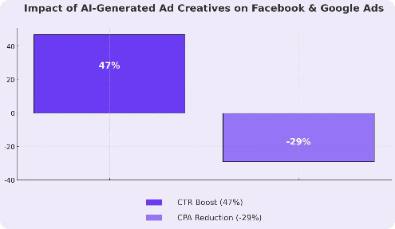
According to Zebracat, brands using AI-powered ad optimization have seen up to a 72% jump in return on ad spend. Many also report sharper engagement, with click-through rates on Facebook and Google Ads increasing by nearly 47% and the cost-per-acquisition dropping by 29%.
One of the biggest challenges with user-generated content is keeping everything on-brand. Automated UGC generation solves that by following your brand guidelines every time.
Whether it’s explainer videos, customer reviews, or social proof on social media, AI tools help you keep the same tone, visual elements, and messaging across every campaign. This consistency builds trust and makes your marketing strategy feel polished instead of scattered.
Expanding into new markets requires investing heavily in translation, voiceovers, and local talent. With AI actors and customizable avatars, you can switch languages instantly while still delivering natural gestures, speech, and expressions.
This means your product reviews, tutorials, and short-form AI UGC videos can reach audiences in multiple countries without losing authenticity. It’s a simple way to make your UGC campaigns truly global.
So how do these advantages play out in real campaigns? Let’s see some practical ways you can use AI UGC content across your marketing channels.
Need to show customers how your product works, but don’t want to hire a full production crew? AI actors make it simple. You can create platform-ready videos with customizable avatars that explain features step by step.
These virtual actors mimic real expressions and gestures. Plus, they give your tutorials a human feel while saving serious time and production costs.
A great example comes from UBS, the Swiss bank, which now uses AI-generated avatars of its analysts to share research insights through video. It’s improved client engagement while making their content creation process faster and easier.
Customer reviews are one of the strongest forms of social proof, but collecting them can be tough. With AI voiceovers and avatars, you can turn written feedback into authentic-looking testimonials that sound like real people.
These AI-generated UGC videos give you flexibility, different tones, languages, and styles, while keeping your product image, brand coherence, and messaging fully intact. It’s a quick way to scale reviews without waiting for customers to hit record.
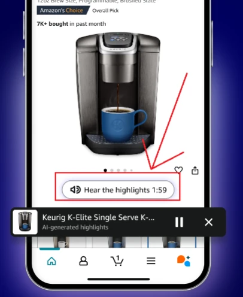
For instance, Amazon has started experimenting with AI voiceovers that read product summaries and customer reviews directly on product pages.
“We’ve recently started testing new short-form audio product summaries on select product detail pages, with AI-powered shopping experts discussing key product features. These AI shopping experts have done the research for you, analyzing product details, customer reviews, and information from across the web, then bringing product details to life and allowing customers to simply hear the highlights.” Rajiv Mehta, Vice President, Search and Conversational Shopping, Amazon
This is how it looks:
Running ads on TikTok, Instagram, or Facebook usually means hiring influencers, shooting multiple takes, and editing for weeks. With AI creators, you can skip the heavy lifting. AI-generated UGC videos let you launch ads quickly, test multiple variations, and match different audience profiles with ease.
These AI avatars and virtual actors can deliver product reviews, unboxings, or social-proof style content that feels authentic to real people, without the huge production bill.
Take Headway, the edtech brand, as an example. They leaned on AI to run ad campaigns that reached 3.3 billion impressions in just 6 months of 2024. Even better, their video ad ROI climbed by 40% at the same time.
Ever notice how the right review at the right time can make you hit “add to cart”? That’s where AI-powered displays come in. Instead of showing every shopper the same product reviews, AI tailors what appears based on each profile.
One person might see reviews highlighting product quality, while another sees testimonials focused on value or style. This kind of personalization feels natural, builds trust, and helps drive up conversion rates without extra manual work.
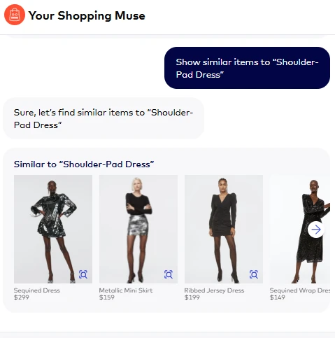
For example, Mastercard’s Shopping Muse uses generative AI to turn casual search terms into tailored product recommendations. This creates a more personalized shopping experience that lifts conversions.
Short clips are the heart of TikTok, Reels, and YouTube Shorts, but shooting and editing them at scale is exhausting. AI takes the heavy load off your shoulders. You can auto-generate platform-ready videos, resize for different aspect ratios, and even clean up lighting, sound, and composition elements.
Need captions, motion effects, or quick cuts? AI video editing software handles it in minutes. The result is authentic, user-style content, like unboxings, how-to demos, or “see how others are using this” nudges, that looks natural enough to blend right into your audience’s feed.
A strong example here is Lil Miquela, a virtual influencer created by Brud. She has partnered with major brands like Prada and Calvin Klein. Her success shows how AI-driven characters can blend seamlessly into social media.
So how do you actually scale AI-generated UGC without losing the human touch? It comes down to having the right mix of planning, automation, and smart analytics.
Let me share a few approaches that actually work:
These strategies make AI UGC feel authentic while keeping your campaigns scalable and performance-driven.
AI UGC tools help brands create UGC-style videos fast, without waiting on creators or long production cycles. These UGC platforms focus on speed, scale, and repeatable formats that work well for ads, product pages, and social feeds.
Here are the most widely used options right now, grouped in a simple comparison to help you choose faster.
The best tool depends on what you want to achieve. Major factors to consider are:
Keeping these in mind will help you choose a tool that fits your workflow and lets you scale without losing authenticity.
AI UGC videos work best when they follow the same patterns as real creator content. The goal is to move fast, keep things simple, and make the video feel like it came from a real person, not a brand team.
Below is a practical framework you can use to plan, create, and publish AI UGC videos that fit today’s social platforms.
Start by choosing tools that cover the full flow from script to video. At a minimum, you’ll need help with writing, voice, avatars, and final video output. Many AI UGC platforms let you paste text and get a ready-to-post video in minutes.
Look for tools that support:
The right setup saves time and helps you test ideas quickly without switching between too many tools.
Before opening any tool, decide what the video should communicate. This step keeps the final result focused and easy to follow.
Think about:
Good UGC feels casual and direct, like someone sharing a quick opinion or experience.
Your script should sound like everyday speech. Short sentences work better than polished marketing copy. So, write the way a real person would talk on camera.
For example: “I tried this tool today, and it saved me a lot of time.”
This script becomes the voice and message of your video, so keep it clear, friendly, and easy to follow.
Next, pick an avatar that feels natural for your audience. Most platforms offer a wide range of people, tones, and delivery styles. Some tools also let you create a custom avatar based on your voice or look.
When choosing an avatar:
The more human the avatar feels, the more believable the video becomes.
Upload your script and select your avatar inside the AI tool. The platform will generate a video where the avatar delivers your message.
Many tools also let you add:
Use these features lightly. The goal is to support the message, not distract from it.
Once the video is ready, review it as if you were scrolling through your feed. Ask yourself if it feels natural and easy to watch.
Common tweaks include:
Even small edits can make the video feel closer to real UGC.
After editing, export the video in the right format for your platform. Post it on social media, use it in ads, or place it on a product page.
Also, remember to keep testing different hooks, avatars, and scripts. AI UGC makes it easy to try new versions fast, so you can see what connects best with your audience and build from there.
You can also check out this video to learn more:
AI UGC videos move fast, so tracking the right metrics helps you understand what actually works and what needs to change. These numbers show how people react to your content, how long they stay, and whether the video pushes them to take action.
Here are the key metrics to track:
Together, these metrics show if your AI UGC feels natural, keeps attention, and drives real outcomes.
So how do you actually scale AI-generated UGC without losing the human touch? It comes down to having the right mix of planning, automation, and smart analytics.
Let me share a few approaches that actually work:
Scaling AI UGC works when humans are involved at the idea stage. Real creators or internal teams should define hooks, talking points, and tone. You can then use AI to turn those ideas into repeatable formats like short reviews, captions, and video variations.
This approach already matches how most teams work today. According to the Content Marketing Institute, almost nine in ten marketers use AI for written content, while about half rely on it for creative assets like images and video. That balance keeps content grounded while still moving fast.
Automation helps you scale without adding manual work. AI tools can handle resizing videos, adjusting captions, and scheduling posts across TikTok, Instagram, and Facebook.
This matters because repetitive tasks slow teams down, and around 43% of marketing professionals already use AI to automate these processes. With workflows in place, campaigns stay consistent across platforms while your team focuses on ideas and testing instead of uploads.
AI analytics make it easier to see what connects with viewers and what falls flat. These tools track engagement, clicks, and feedback, then surface patterns you might miss by checking dashboards manually.
That speed is a big reason adoption keeps growing, since SurveyMonkey research shows 81% of marketers use AI to get insights faster than manual analysis. Faster insight means faster edits, better hooks, and cleaner creative decisions.
AI UGC should not be used on a single platform. The same video can support paid social, organic posts, email campaigns, and product pages. Reusing content this way stretches its value and keeps messaging consistent, while still letting you test formats and placements without re-shooting new material.
These strategies make AI UGC feel authentic while keeping your campaigns scalable and performance-driven.
AI UGC is already visible on major social platforms, where virtual creators publish content that looks and feels similar to human-led posts. These UGC examples show how AI characters build audiences, work with major brands, and take part in culture in a way that feels familiar to social media users.
Here are well-known examples of AI UGC in action.
Lil Miquela is one of the earliest AI influencers to gain global attention. She has built an audience of around 2.4 million followers by posting fashion photos, music releases, and commentary on internet culture.
Over time, her content shifted from hiding her AI nature to being fully open about it, which helped build trust and long-term interest. Brand work with names like Prada and BMW shows how AI UGC can move from novelty to mainstream partnerships.
Imma is a Japan-based virtual character who feels more like a cultural figure than a typical AI model. With roughly 386,000 followers, her content focuses on fashion, public events, and collaborations with global brands such as IKEA and Lenovo.
What sets her apart is how naturally she appears in real-world settings and media. This makes her presence feel grounded rather than artificial.
Aitana López is an AI influencer created in 2022 and built around fitness and lifestyle content. She has grown to about 392,000 followers by sharing gym clips, daily-life posts, and bold visuals.
Her success also shows the business side of AI UGC, as she earns a steady monthly income through sponsored content and fan platforms. This proves that AI creators can drive real revenue.
When it comes to AI-generated UGC ads, the rules aren’t the same everywhere. Some regions take a strict approach, while others are more relaxed.
Let’s see what you need to know before running campaigns in 2025:
China is leading the way with some of the toughest AI content laws. On March 14, 2025, the Cyberspace Administration (CAC) released new Labeling Rules, which officially came into effect on September 1, 2025.
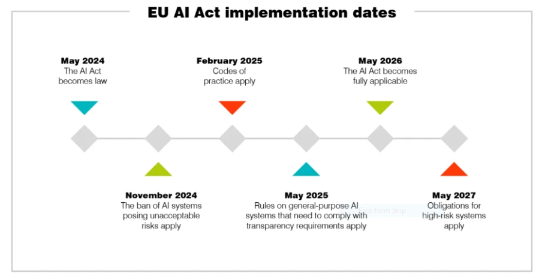
The EU’s AI Act, which was passed in 2024 and will be fully implemented in 2026, has similar rules. All AI-generated text, images, audio, and video need mandatory labeling. Deepfakes and synthetic media must be clearly disclosed, especially in marketing and advertising.
The Federal Trade Commission (FTC) hasn’t set strict, AI-specific rules yet, but it has started cracking down on content that could mislead consumers.
Here’s the breakdown:
What’s generally allowed:
What’s not allowed:
“The final rule addresses reviews and testimonials that misrepresent that they are by someone who does not exist, such as AI-generated fake reviews, or who did not have actual experience with the business or its products or services, or that misrepresent the experience of the person giving it. It prohibits businesses from creating or selling such reviews or testimonials.” Federal Trade Commission Press Release
A single global standard doesn’t exist yet. China and the EU are setting the pace, while many other regions are still working on their own regulations.
What this means for you:
The best tool depends on what you want to achieve. Major factors to consider are:
Keeping these in mind will help you choose a tool that fits your workflow and lets you scale without losing authenticity.
AI UGC is powerful, but if you’re not careful, it can backfire. Some of the biggest risks to watch for are:
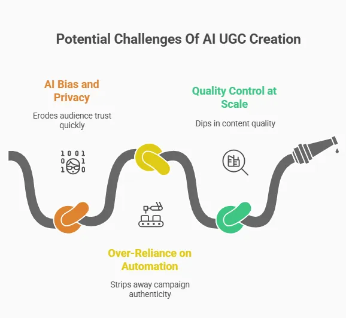
AI UGC can cause problems when models reflect hidden bias or handle data the wrong way. That risk can quickly increase in public-facing content, where trust matters most.
A study on AI adoption found that bias and lack of transparency are among the biggest challenges for users and organizations. So, to reduce this risk, work with platforms that follow strict data rules, limit data retention, and give visibility into how content is generated.
Always review AI-generated videos and scripts before publishing, especially when they reference people, health, or personal experiences.
Automation makes scaling easy, but using it without limits can make content feel flat or repetitive. Audiences notice when feeds lose variety or personality.
In one survey on AI risk in business, about 17% of respondents said over-reliance on AI was their top concern, even more than transparency issues.
The solution here is balance. Pair AI UGC with real customer clips, creator videos, or user reviews so your content still feels human while AI handles volume and speed.
Producing content faster only works if quality stays high. When teams publish large volumes of AI UGC, mistakes, weak messaging, or off-brand visuals can slip through.
One study found that poor data quality is a major source of AI risk, which leads to errors and lower trust when training data is incomplete or inconsistent.
However, regular reviews, performance tracking, and audience feedback help catch problems early. So, cut low-performing assets quickly and double down on formats that actually connect.
AI UGC really is a practical way for you to scale content while retaining authenticity. From reviews and tutorials to short-form AI ads and eCommerce displays, the real power comes from adding AI efficiency to human creativity.
When you get that mix right, you stay ahead by delivering authentic content that resonates across markets and platforms. That balance lets you move faster, test smarter, and keep your content feeling real as AI UGC continues to shape how brands communicate in the years ahead.
Key takeaways
If you’re looking to scale UGC without cutting corners, inBeat Agency is here to help. We keep every campaign compliant and make sure creators are always part of the process. Every piece of content we produce is built to connect with your audience and convert effectively.
Book a free strategy call today to scale your UGC campaigns with authentic, compliant content that converts.
How can AI help in creating authentic UGC?
AI helps you scale user-generated content by turning reviews, tutorials, and social proof into videos or posts that feel natural while staying aligned with your brand guidelines.
What are some popular AI tools for UGC creation?
Tools like InVideo AI, ChatGPT 4o, Synthesia, and AI video generators are popular for creating short-form videos, avatars, and product reviews that look authentic and platform-ready.
How do I maintain authenticity when scaling content with AI?
Keep a balance between AI and real people. Use AI for editing, repurposing, or scaling, but let actual customers and creators provide the original voice and experience.
Can AI replace human creativity in UGC creation?
No. AI can speed up content generation and personalization, but the most engaging campaigns still need human creativity, emotions, and real-life experiences to feel authentic.
How can AI optimize UGC for social media platforms?
AI tailors content to each platform by adjusting formats, aspect ratios, and captions. It also uses predictive analytics to improve engagement rates and maximize campaign ROI.
