
Did you know that 86% of shoppers are more likely to trust a brand that shares user-generated content? That’s the power of consumer-generated marketing: it builds trust, creates a connection, and turns everyday buyers into content creators.
And if your brand isn’t tapping into it yet, you’re leaving serious attention, engagement, and conversions on the table.
In this blog, we’ll break down:
P.S. Struggling with rising CPAs, ad fatigue, or weak content performance? You don’t need more ads, you need better content from creators your audience actually trusts. That’s where expert agencies like inBeat come in. They help you scale with UGC from handpicked micro and nano influencers who create content that converts.
Book a free strategy call now and start turning your customers into creators.
What it is: Consumer-generated marketing (CGM) uses content created by real customers, like reviews, social posts, and videos, to promote a brand more authentically than traditional ads.
Why it works: Shoppers put more trust in brands that share UGC. It builds trust, boosts engagement, lowers acquisition costs, and improves conversions.
Key benefits:
Tactics to implement CGM:
How to encourage CGM:
Best practices:
Real-world examples:
Metrics to track:
Bottom line: Consumer-generated marketing creates trust and drives results. For scalable, authentic content that performs, agencies like inBeat help brands partner with real creators who resonate with audiences.
Consumer-generated marketing (CGM), also sometimes known as user-generated content (UGC), is a strategy where brands harness content created by their customers. This includes product reviews, social media posts, unboxing videos, and more, all showcasing how people interact with the brand.
Since the content comes directly from users, it feels more authentic and trustworthy than traditional advertising. By comparison, UGC can be created by influencers or professional content creators, too.
From that point of view, CGM helps you build stronger connections with your audience and turns everyday customers into powerful advocates for the brand.
In fact, brands that incorporate consumer-generated content into their marketing see meaningfully higher engagement. CGC‑based ads can get up to 4× higher click‑through rates compared with traditional branded ads.
Early internet marketing was controlled almost entirely by brands. Websites were built to share information, list products, and push messages in one direction. Interaction was limited, and customers had little space to respond or share their own views.
That changed as social platforms and content tools became widely available. People started posting opinions, photos, and videos at scale, and those voices began shaping public conversations. Major social moments showed how fast user content could spread and influence others, which shifted how brands thought about communication.
Over time, companies realized that consumer voices were no longer optional. Ignoring them meant missing trust and relevance. Today, strong marketing uses both brand messaging and real consumer input because they recognize that people move freely between online and offline spaces and expect brands to listen, respond, and adapt.
Consumer-generated marketing resonates most with people who spend a lot of time online and value real opinions over polished ads.
Younger audiences, especially those active on social platforms, are quick to spot scripted messaging and tend to trust content created by people like them. Seeing real customers share honest experiences makes brands feel more relatable and easier to believe.
At its core, this type of marketing mirrors modern word of mouth. Instead of a private recommendation shared with a friend or family member, the message travels through posts, comments, and videos that reach people far beyond a local circle.
That shared experience helps buyers feel more confident, even when the recommendation comes from someone they’ve never met.
Consumer-generated marketing matters to anyone whose growth depends on trust, attention, and real customer voices. Brands in retail, ecommerce, travel, apps, and consumer tech all benefit because buying decisions in these spaces are heavily shaped by peer opinions and shared experiences.
This topic is just as important for marketing leads, brand owners, and digital teams. As audiences grow more selective, polished brand messages alone don’t carry the same weight they once did.
People want proof from other people. Teams that understand how to encourage, manage, and reuse consumer content are better positioned to build credibility, drive action, and stay relevant as buyer behavior keeps shifting.
Consumer-generated marketing now plays a central role in how people learn about brands and decide what to buy. Social platforms have become key spaces for opinions, reviews, and shared experiences.
This makes customer voices just as influential as brand messaging. Instead of relying only on ads, many buyers look to real people to guide their choices.
Here are a few stats that show where consumer-generated marketing stands today:
Together, these signals show that people trust people. Brands that listen, respond, and make space for customer voices are better aligned with how buying decisions actually happen today.
Consumer-generated marketing offers a ton of perks for brands looking to build stronger connections with their audience.
Let’s see why it works:
People trust real customer voices way more than polished brand messaging. In fact, 90% of consumers say UGC is more trustworthy than traditional advertising, and 92% trust word‑of‑mouth or UGC over brand channels. That genuine vibe resonates because it doesn’t feel like a sales pitch.
Social platforms reward authenticity, and that’s exactly what consumer-generated content delivers. CGC-based ads get higher click-through rates and a 50% lower CPC compared to brand-created content. When you mix consumer posts with branded marketing campaigns, engagement jumps, studies show a 28% increase.
And on YouTube, user-generated videos get 10× more views than those produced by brands.
Why? Real content feels more relatable, and audiences stop to engage with it.
Using consumer-generated content is also cost-effective. Instead of bringing on a full-time content producer (which can cost around $72,000 a year), you can lean on content your customers are already sharing.
On top of that, inBeat Agency's research found that CGC-based campaigns often lead to 29% higher web conversions, which means you’re getting strong results without a big spend. It’s a practical way to stretch your marketing budget while keeping things authentic.
Consumer-generated reviews, blog posts, and social captions naturally embed long-tail keywords your SEO loves. In fact, about 25% of top search results for big brands link to UGC. Plus, this kind of content actually influences buying behavior, 79% of shoppers say UGC has a big impact on what they decide to purchase.
With the above benefits in mind, it's time to explore how you can effectively use consumer-generated content in your marketing strategy.
Customer reviews are one of the most powerful tools in your CGM toolbox. They build trust on your product pages as well as give potential buyers the confidence they need to make a purchase.
As Dr. Robert Cialdini puts it:
“We are generally uncertain when it comes to making decisions. That’s why 98% of us consult online reviews before we buy a product nowadays. Knowing that others have supported or purchased helps give us more certainty.”
But don’t just stop there, repurpose these glowing reviews across your email campaigns, ads, and landing pages for maximum impact.
Sites like Trustpilot, Amazon, and G2 are great for gathering valuable feedback and sharing real customer experiences. Plus, the more reviews you have, the better your brand’s reputation will look online!
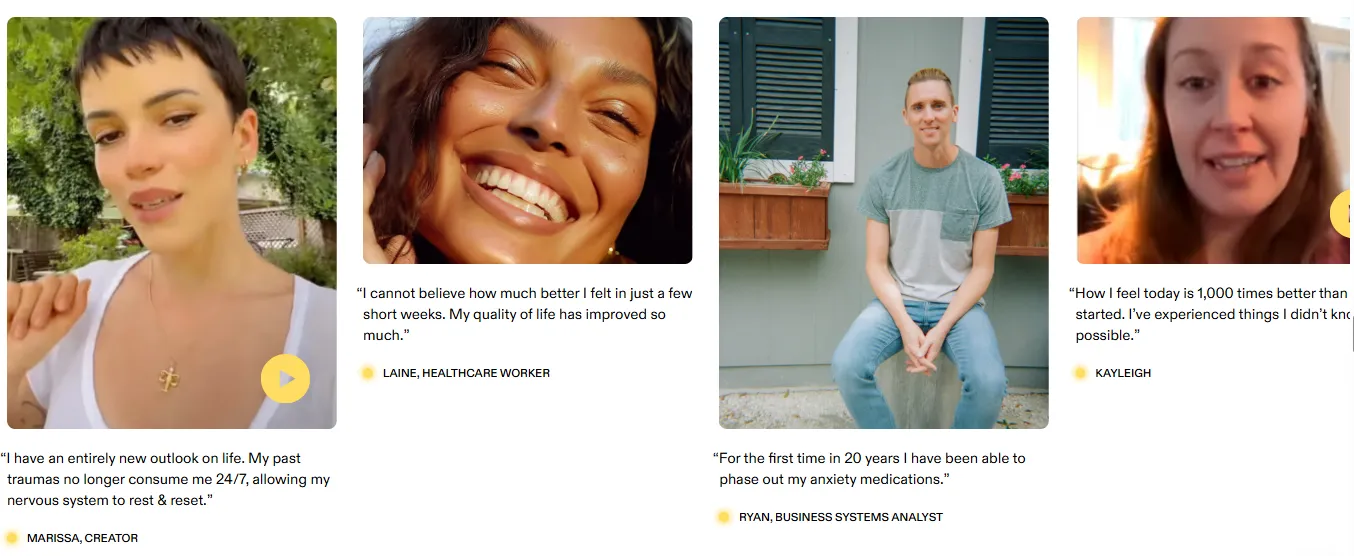
For example, Mindbloom features real video testimonials and customer reviews directly on its homepage. These firsthand stories from clients add strong social proof and create a sense of community trust.
Hashtag campaigns are one of the easiest ways to spark consumer-generated content on any social media platform. They give your target audience a clear way to share their experience while keeping the conversation centered around your brand.
When done right, they increase discoverability, create brand-aligned content, and build a community around your products.
Hashtags like #thesweatlife from Lululemon or #ShotoniPhone by Apple didn’t go viral by accident; they gave content creators a way to showcase their personal stories while staying connected to the brand’s identity. Watch this example:
Moreover, branded hashtags also help you track engagement, gather social signals, and curate top-performing content across your social media channels.
If you want to kickstart content creation fast, giveaways and contests are a solid move. They’re perfect for encouraging photo and video entries from real customers while giving them a reason to talk about your brand on social media.
Customers can share unboxing videos, product reviews, or even TikTok videos highlighting their experience. A great example is GoPro’s #GoProAwards campaign, where the brand rewards users for submitting jaw-dropping footage captured with their cameras.
This kind of contest fuels a steady stream of consumer-generated content that’s both engaging and brand-aligned.

Contests like these also support viral marketing, build brand loyalty, and supply your content strategy with fresh material across social networking services.
Nothing connects with your audience like a real customer story. Sharing personal experiences from loyal customers humanizes your brand and adds emotional depth to your content marketing strategy. These stories go beyond product reviews; they show the full customer experience and how your brand fits into real lives.
One standout example is Airbnb’s “Made Possible by Hosts” campaign. To create it, Airbnb invited hosts and guests to share real photos and videos. The authentic early submissions were so emotionally resonant that they replaced traditional advertising footage.
The “Forever Young” video alone attracted 7.5 million views, and the overall campaign garnered over 17 million views across platforms, boosting trust and engagement.
Use narratives like this across your social media channels, community forums, and email campaigns to create powerful connections, inspire potential customers, and build brand loyalty
Turning social media posts into clickable shopping moments is a smart way to connect content creation with conversions. Shoppable Instagram galleries let you feature user-generated content from real customers while linking directly to the products they’re showing off.
When someone sees a tagged product in an authentic post, it feels less like an ad and more like a trusted recommendation. That’s the power of social proof in action.
A great example is Sohome’s “Shop the Look” gallery.

They feature Instagram photos from real customers using hashtags like #sohome and #makeityourown, then tag the exact products in each image. Visitors can explore curated customer spaces and buy directly from what they see. This turns everyday content into a seamless shopping experience.

These galleries also help brands collect social signals, build brand advocacy, and promote trust across social networking services.
When influencers genuinely love a product, their content feels less like an ad and more like a trusted recommendation. That’s why collaborating with nano-creators, those everyday users with niche audiences, is such a smart move. These partnerships blur the line between consumer and creator, making the content feel natural and relatable.
Unlike traditional influencer marketing that can come off as scripted, nano-collabs often feel like honest product recommendations from a friend. They help brands tap into tight-knit communities, drive engagement, and generate high-quality user-generated content.
You’ll often see these creators sharing product reviews and unboxing videos that spark real conversations and build brand loyalty.
Expert agencies like inBeat specialize in this exact strategy. For example, Prose partnered with inBeat to run a series of TikTok ads featuring nano-creators. The content didn’t feel like ads; it felt like genuine customer experiences, and that’s what made it so effective.
It’s a powerful way to turn loyal customers into brand influencers while fueling your content strategy with authentic, consumer-generated media.
Consumer-generated content works best when people clearly know what to do next. A strong call to action guides customers to share, tag, post, or submit content without confusion.
So, make sure to place simple prompts where your audience already interacts with your brand. This can be your Instagram bio, pinned social posts, website banners, or product pages. Short prompts like “Share your setup,” “Tag us to be featured,” or “Post your look using our hashtag” remove friction and make participation feel easy.
Social sharing buttons also play a big role here. Adding them to product pages, order confirmation screens, and thank-you emails makes sharing a one-click action. Customers who just purchased are often the most willing to post, so giving them an easy option at that moment can lead to a steady flow of real customer content without extra effort.
To underline why this matters, using a clear and specific call to action can lift conversion rates by about 161%. This shows that direct, focused prompts make it far more likely people will actually take the step you ask for, whether that’s sharing content, tagging your brand, or posting their experience.
Supporting a cause gives consumers a reason to engage beyond the product itself. When people feel their content helps support something meaningful, they are more likely to participate and share.
Cause-driven campaigns work best when the mission fits your brand values and audience expectations. Highlighting social responsibility, sustainability, or community support in customer content adds emotional weight and strengthens the connection.
This can include campaigns where purchases support a nonprofit, limited-edition products tied to donations, or user stories connected to a shared mission.
Now the major question arises: how do you get customers to actually create content for your brand?
Let’s break it down.
People are far more likely to share content when they feel connected to something meaningful. That’s why building a strong brand community matters. When your audience feels included, through shared values, humor, or recognition, they naturally want to show their support.
Take Glossier as a powerful example. It started off as a beauty blog called Into the Gloss, where readers shared routines, shelfies, and honest reviews.
That community was so engaged that the brand launched the Rep Program, inviting top fans to become brand ambassadors. They received perks like affiliate codes, early access, and even community trips.
As a result, Glossier saw a major lift in engagement and long-term loyalty, driven directly by consumer-generated content.
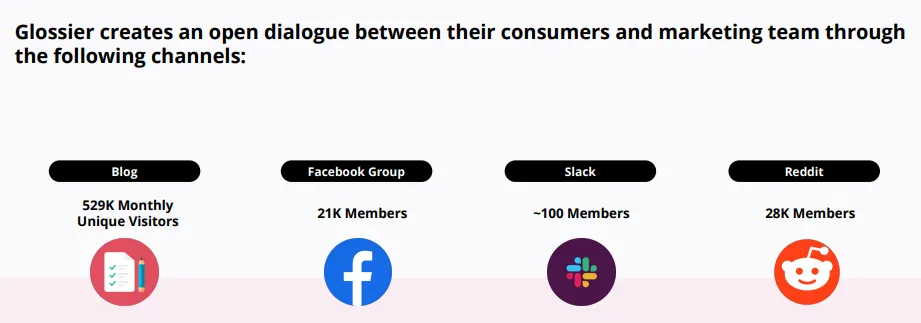
It’s not just about the product. When you create a space where customers feel valued, they respond. They start sharing stories, posting reviews, and tagging your brand across social media channels. That kind of authentic engagement fuels social proof and deepens brand loyalty.
If someone tags your brand or posts about your product, don’t leave them hanging. Recognition goes a long way. A simple repost on your social media channels, a shoutout in your Stories, or even a quick “thank you” DM can turn a casual customer into a loyal brand advocate.
Here’s a neat example:
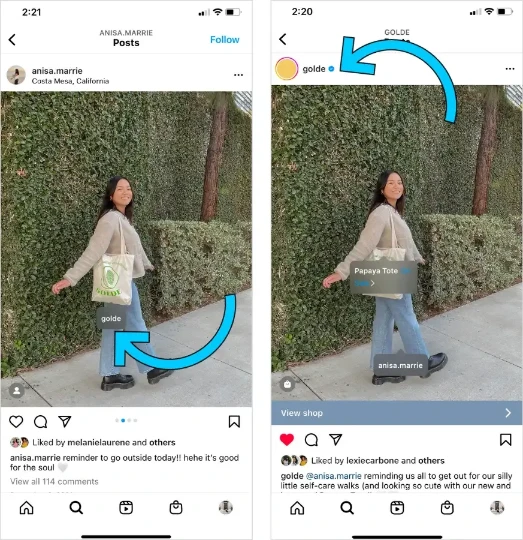
When people see that brands actually notice and celebrate their content, it creates a ripple effect. Others get inspired to join in, especially on visual platforms like Instagram and TikTok.
It also strengthens your social proof and gives your feed a steady stream of authentic, consumer-generated content, all while making your audience feel seen and appreciated.
You don’t need to throw cash around to get people creating. Sometimes, a little recognition or exclusive access is all it takes. Non-cash rewards like early access to new products, a feature on your social media feed, or loyalty badges can motivate content creators to share their experience.
This kind of incentive feels more personal and more authentic. It shows your audience that their voice matters, which builds trust and keeps them engaged. When you reward content creators in small but meaningful ways, you end up with a steady flow of consumer-generated content that supports both your brand awareness and long-term loyalty.
Once the content starts rolling in, it’s important to use it with intention. Let’s explore some best practices to help you protect your brand, respect your audience, and get the most out of every piece of consumer-generated content.
Before reposting any consumer-generated content, make sure you get explicit permission. Even if it's tagged, using content without consent can lead to legal issues and damage your online reputation. Asking first shows respect, builds trust, and keeps your consumer-generated marketing strategy clean, ethical, and brand-safe.
Here’s a helpful YouTube clip walking you through how to properly request permission for UGC as a brand:
Tag the original creator whenever you share their content. It shows that you respect their work and value their voice in your community. This kind of recognition builds trust and keeps people engaged. When creators feel appreciated, they’re more likely to keep contributing content that supports your brand.
Don’t collect content just to have it. Every campaign needs a purpose. Are you trying to drive more product reviews? Reach new audiences? Build brand awareness? Define that upfront. When the goal is clear, you’ll know what type of content to ask for, where to share it, and how to measure success.
Not all consumer-generated content is equal. Keep an eye on which posts get the most engagement, clicks, or conversions. Use that insight to guide future campaigns and repost top content across your social media platform, email marketing, or even digital signage.
Consumer-generated marketing can bring strong results, but it also comes with real risks. Once customers start creating and sharing content about your brand, you give up full control over the message. That makes preparation and monitoring important before you launch any CGM effort.
People are very open online. They share praise, but they also share complaints, and social platforms make those opinions easy to spread fast. If your brand already has unresolved issues, consumer content can amplify them instead of helping you.
Here are the main risks to keep in mind:
Before pushing for consumer-generated campaigns, it’s smart to fix support gaps, review processes, and response plans. When the foundation is strong, customer content becomes an asset rather than a liability.
Both approaches play a role in modern marketing, but they work in very different ways. The table below breaks down the key differences so it’s easier to see how each one functions and where it fits best.
Now let’s look at how some brands are actually making this work in the real world.
Bluehouse Salmon does a great job of turning real customer content into valuable brand storytelling. They regularly repost consumer-generated content from food lovers who share honest product reviews, cooking tips, and creative recipe ideas.
These social media posts promote the product, educate the target audience, and highlight the full customer experience. It’s a smart way to build brand awareness, inspire product recommendations, and grow a loyal community through authentic user-generated content.
Chipotle lets the internet do the talking.Their feed is packed with funny, creative, and relatable content made by fans, not marketers. From burrito bowl hacks to viral menu jokes, Chipotle embraces the chaos and reposts the best of it.
When fans share content, whether it’s funny, clever, or unexpectedly helpful, Chipotle jumps in. They repost videos, leave comments, and interact like a real person would. It makes the brand feel human, approachable, and part of the culture.
The takeaway? Engage with your audience, add humor, and let their content do the storytelling.
Hurom turned things around by leaning into performance-driven user-generated content. With help from inBeat agency, the brand moved away from overly promotional ad designs and tapped into content that felt personal and trustworthy. They partnered with micro and nano creators who focused on real health topics, like gut health, clear skin, and clean living.
Instead of relying on constant discounts, Hurom built trust through social proof and relatable storytelling. inBeat’s creative strategist tested different hooks, CTAs, and formats to find what truly worked. The results spoke for themselves: 60% drop in CPA, 36% lower customer acquisition cost, and 2.5x increase in ROAS.

If you’re investing in consumer-generated content, you’ve got to track what’s actually working. And no, we don't mean that you should follow vanity likes. Here, we’re talking real performance indicators that show impact across your content strategy and social media channels.
So, make sure to measure these metrics.
Engagement rate shows how people interact with consumer content compared to branded posts. User content often gets stronger reactions because it feels more real and relatable.
You can track this inside native platform analytics like Instagram Insights, TikTok Analytics, and Facebook Page Insights. Third-party tools like Sprout Social also help compare engagement across posts and platforms.
Make sure to focus on comments and saves, since they usually signal deeper interest.
To give you a clear benchmark, Hootsuite reports that average engagement rates are around:
This helps you judge whether your consumer-generated posts are performing above or below typical platform levels.
.webp)
Brand mentions show how frequently people talk about your brand without being asked. This includes posts, captions, comments, reviews, and forum discussions.
Social listening tools such as Brandwatch, Sprout Social, and Hootsuite let you track mentions across social media, review sites, and online communities. This metric helps you see how far consumer content spreads without paid promotion.
Clicks tell you whether people take action after seeing consumer content. This matters if your goal includes site visits, product views, or sign-ups.
You can track this using UTM links in Google Analytics, link-in-bio tools, and platform analytics on Instagram and TikTok. Shoppable posts and tagged product videos also show click activity inside commerce dashboards.
Conversion rate shows how many people complete a desired action, such as buying a product or signing up, after interacting with consumer content.
Track this through Google Analytics, Shopify analytics, or your ecommerce platform. Look at assisted conversions as well, since consumer content often supports decisions rather than closing them alone.
To put this into context, Emplifi’s Social Media Benchmarks report shows that posts featuring user-generated content drove 10.38x higher conversion rates than non-UGC posts. They also lead to more website visits and higher average order values, which shows how consumer content supports both action and revenue.
Sentiment analysis looks at how people feel when they talk about your brand. It goes beyond how much content exists and focuses on tone and emotion. Positive sentiment often dominates customer perception of digital marketing across platforms.
Tools like Brandwatch and Sprout Social analyze language in posts and comments to label them as positive, neutral, or negative. This helps you spot early issues or understand what people genuinely like.
This metric shows how frequently consumer content gets reused across your own channels, ads, emails, or product pages. High reuse usually means the content performs well and fits your brand voice.
You can track this internally by tagging assets in your content library or UGC platform. Many brands also track which pieces get approved for paid ads or homepage use.
Creator participation rate measures how many customers or fans actively create content for your brand over time. This helps you understand how strong your community really is.
Track this by counting unique contributors per month or campaign. UGC platforms, campaign hashtags, and social listening tools make this easier to monitor.
Cost per asset shows how much you spend to get one usable piece of consumer content. This matters when comparing consumer content to studio shoots or influencer deals.
You can calculate this by dividing total campaign spend by the number of approved assets. Track it in spreadsheets or UGC platforms that log creator payouts and approvals.
Consumer-generated marketing is set to grow as people spend more time on mobile devices and social platforms.
Sharing moments, opinions, and experiences has become a daily habit, which means brands will keep seeing customers act as active voices rather than passive viewers. Content will feel more immediate, visual, and tied to real-life moments, both online and offline.
Also, as technology continues to blend physical and digital spaces, consumer content will play a bigger role in shopping, travel, and everyday decisions. Social platforms, local signals, and mobile-first experiences will shape how people talk about brands and products.
Businesses that focus on encouraging real participation, reacting quickly, and adapting to how people share today will stay relevant as consumer behavior keeps shifting.
Consumer-generated marketing is changing how brands build trust and grow online. When real people share real stories, it creates a connection. This content doesn’t feel forced; instead, it feels genuine.
And that’s exactly what your audience wants. When you give your customers the space to speak, they bring in the engagement, reach, and loyalty no paid campaign can match.
This shift puts your customers at the center of your growth. Their voices add meaning, credibility, and momentum that brand messages alone can’t create. Over time, that shared trust turns everyday users into long-term advocates.
Key takeaways
If you’re looking to grow with content that actually connects, expert agencies like inBeat can help. They partner with high-performing micro and nano creators to deliver consumer-generated content that actually drives results.
A customer posting an unboxing video or product review on TikTok is a great example. Brands like GoPro and Chipotle regularly share this kind of content across their social media channels.
It’s a strategy where brands use content made by real customers, like reviews, social media posts, and videos, to promote their products. It builds trust and turns buyers into brand advocates.
Start by building a community, featuring customer posts, and offering simple incentives. Hashtag campaigns, contests, and reposting their content help encourage consistent participation.
Embed reviews, add shoppable Instagram galleries, or showcase customer photos on product pages. Real stories and visuals increase social proof and help guide purchase decisions.
Begin by encouraging customers to share reviews, photos, or videos using a branded hashtag. Add their content on your social media and website to build momentum. You can also partner with expert UGC agencies like inBeat, who work with micro and nano creators to deliver content that feels authentic and performs.
