
In 2026, AI UGC has moved from experimental to operational.
What started as reposted customer photos and product reviews has evolved into AI-assisted content systems powering both social media and paid campaigns.
What started as collecting user-generated content is now native-looking content enhanced (or, in some cases, even created from scratch with artificial intelligence).
The goal is improving creation, moderation, distribution, and performance, all without losing the human voice.
The impact is real, and that’s why 35% of UGC is projected to be produced by AI tools by 2030.
This kind of AI UGC sits at the intersection of authentic customer content and AI-assisted workflows. It combines real user contributions with tools that help structure, scale, analyze, and optimize content for modern marketing demands.
Of course, you need the right tools to create it with, first.
So in this guide, you’ll learn:
This is a practical, tool-driven guide for marketers building scalable systems around real customer voices. Let’s get into it.
We evaluated each platform using a weighted framework focused on real-world performance, scalability, and strategic differentiation. Tools were scored across five core factors:
Only tools that scored consistently high across multiple weighted categories made the final list.
AI UGC is user-generated content enhanced by artificial intelligence.
It refers to real customer content, like reviews, testimonials, product demos, unboxings, and short-form videos, that’s improved, scaled, or analyzed using AI. The human voice stays front and center, with AI supporting speed, structure, and optimization.
Here’s an example of AI UGC created by our inBeat Agency team (UGC style AI actor):
The distinction matters, especially when it comes to trust and compliance.
In 2026, AI typically supports five stages:
What hasn’t changed is the ranking signal that matters most: authenticity.
According to one report, 88% of consumers say authenticity influences which brands they support. That means while AI improves efficiency, real customer voices still drive trust, engagement, and conversion in 2026.
If AI UGC is infrastructure, your tool stack determines how well it runs. These 15 tools support creation, management, moderation, and optimization across the entire UGC workflow.
The AI tools below focus on producing UGC-style content that balances authenticity with performance-driven optimization.
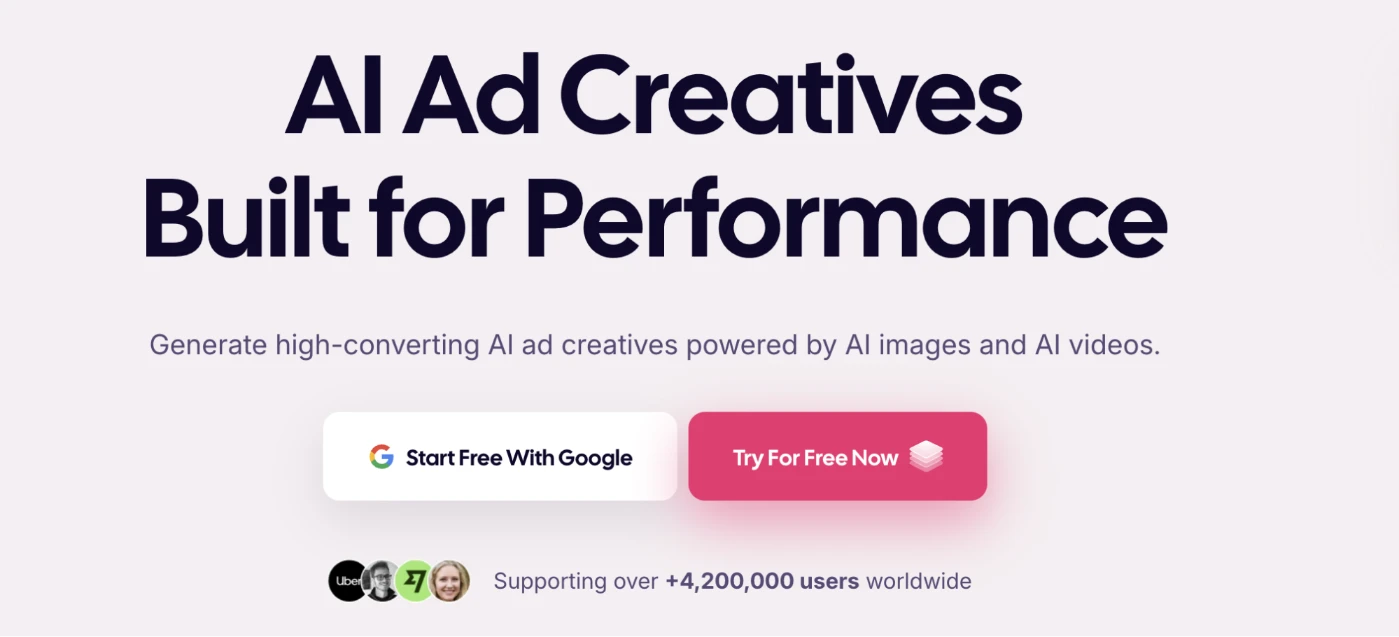
AdCreative.ai is built around generating conversion-driven ad creatives powered by AI trained on real advertising performance data. Instead of just producing visuals, it uses predictive creative scoring to rank and prioritize ads before they even launch.
That pre-launch insight is what makes it stand out. It helps marketers test smarter, cut wasted spend, and focus on the creatives most likely to perform.

Creatify is designed to turn product pages into ready-to-run video ads using AI. Instead of building ads manually, you drop in a URL and generate short-form product videos in minutes. These can include a script, AI avatar or voiceover, and social-ready formatting.
The real value is speed. Unlike generic AI video makers, it pulls structured product data directly from live URLs to auto-build performance-oriented ecommerce ads. As such, it compresses production time, making fast creative iteration possible for eCommerce campaigns.

Unlike pro editors like Premiere or template apps like CapCut, Veed.io merges AI generation and full editing inside one browser-native workspace.
While it supports text-to-video, AI avatars, and script-based creation, its real strength is simplifying post-production. You can add subtitles, clean up audio, correct eye contact, and resize videos for social without touching complex software. Everything runs inside one online editor, which keeps workflows simple and efficient.

HeyGen is built around AI-generated avatar videos that replace traditional filming workflows. Instead of coordinating shoots, brands can create presenter-style videos using custom avatars, voice cloning, lip sync, and multilingual translation directly in a browser.
What sets it apart is its ability to deliver consistent, scalable video messaging across markets, without cameras, crews, or reshoots.

CapCut combines AI creation and editing inside a platform built for short-form video culture.
Alongside trend-inspired templates, it offers AI video generation, auto subtitles, background removal, text-to-speech, and quality enhancement, all optimized for vertical formats. Its real strength is speed and platform fluency, helping content feel native instead of overly produced.
Creating UGC is only half the equation.
The tools below focus on managing performance, streamlining workflows, and scaling content efficiently.
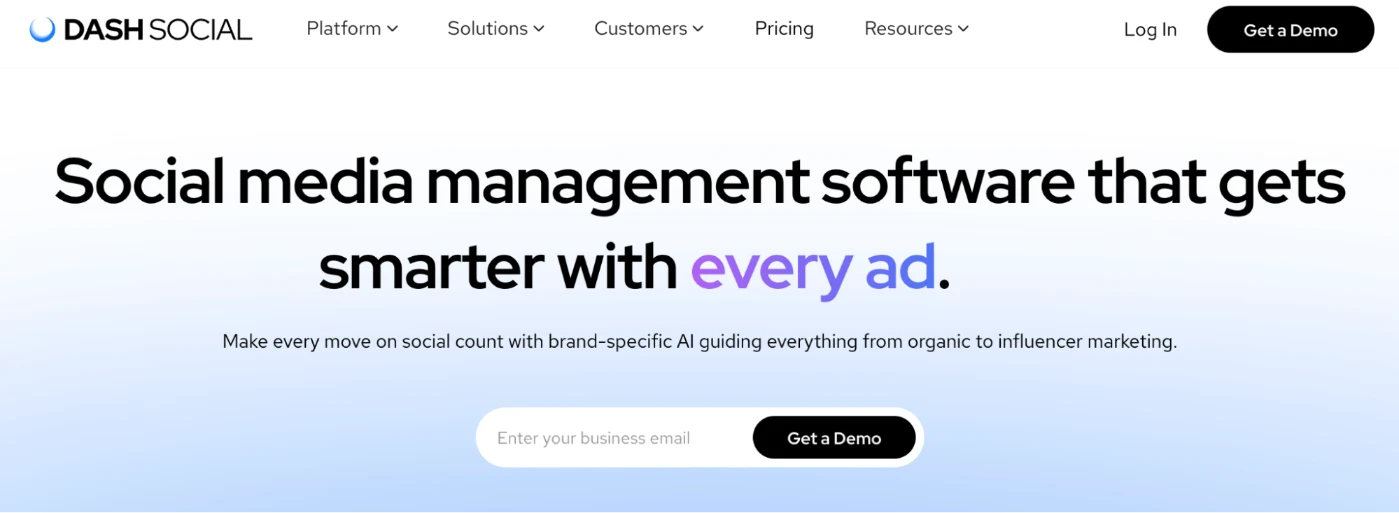
Dash Social connects social content directly to measurable business impact. Using AI-powered visual insights and performance predictions, teams can spot high-performing creator content, benchmark against competitors, and tie engagement back to revenue and earned media value (EMV).
Its real strength is visibility. It turns UGC and social activity into clear, data-backed decisions.
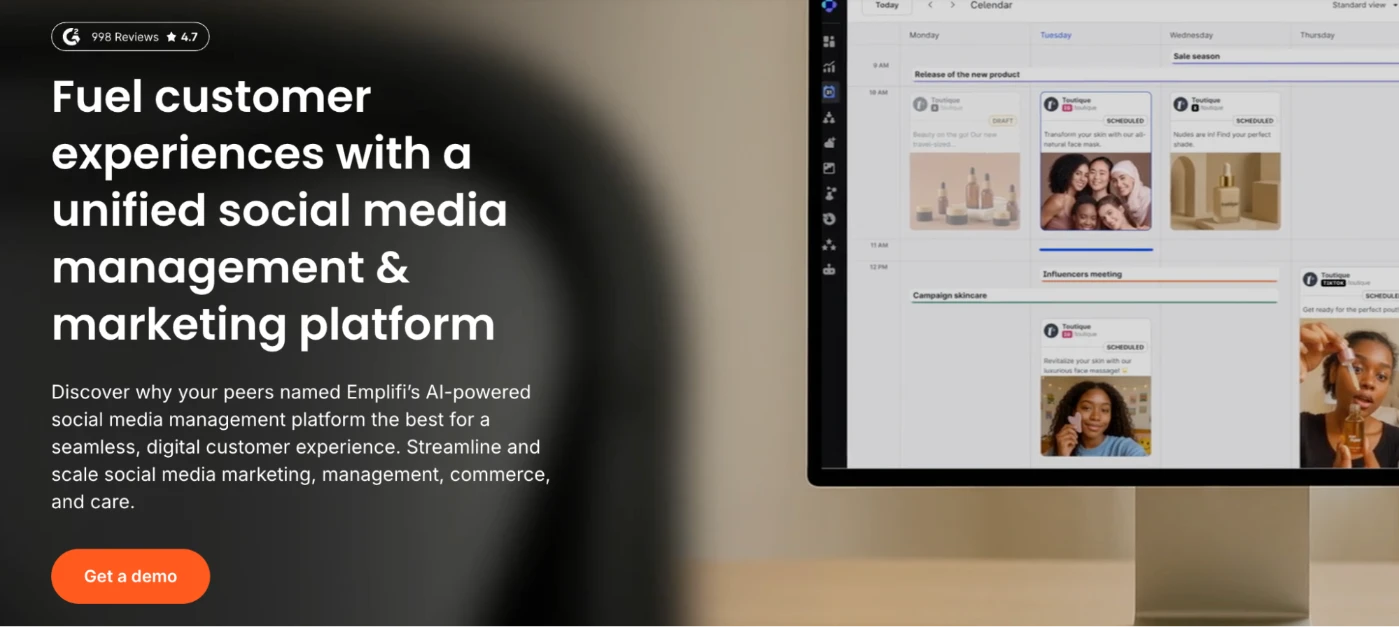
Pixlee TurnTo’s user-generated content capabilities are now part of Emplifi’s unified CX and social marketing platform after being acquired in late 2022. Instead of operating as a standalone UGC tool, its technology now powers Emplifi’s UGC module.
It helps brands discover, tag, and publish customer photos, videos, reviews, and influencer content across commerce and social channels. The real value comes from connecting UGC directly to product experiences and broader social commerce workflows.

Taggbox aggregates social media posts, reviews, and user content into curated, embeddable feeds for websites and digital experiences.
But it goes beyond simple aggregation. Its UGC Suite includes asset management, rights management, moderation, and social commerce features that turn customer content into structured, shoppable displays. One standout feature is its ability to centralize scattered UGC and activate it across the entire buyer journey.
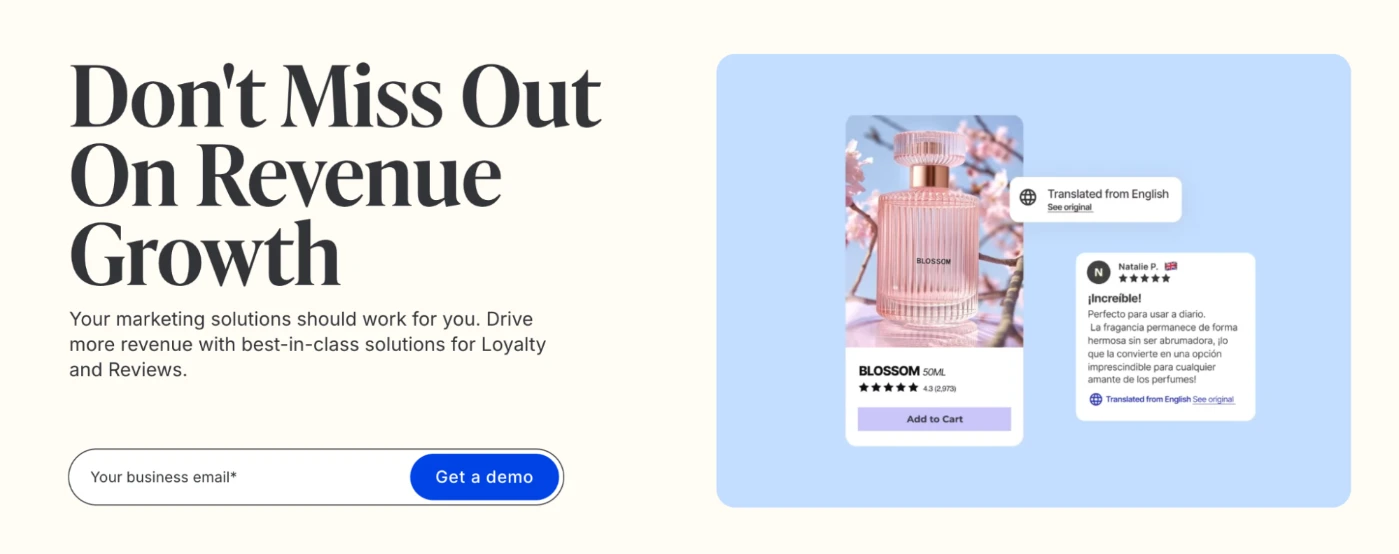
Yotpo helps eCommerce brands turn customer content into revenue-driving social proof. Instead of just collecting reviews, it brings together ratings, photos, videos, and visual UGC into customizable galleries and widgets that can be embedded on product pages, category pages, and across marketing channels to increase trust and boost conversion.
It also connects that content to performance analytics and automated review workflows, making UGC a measurable part of the buyer journey instead of just a nice-to-have.
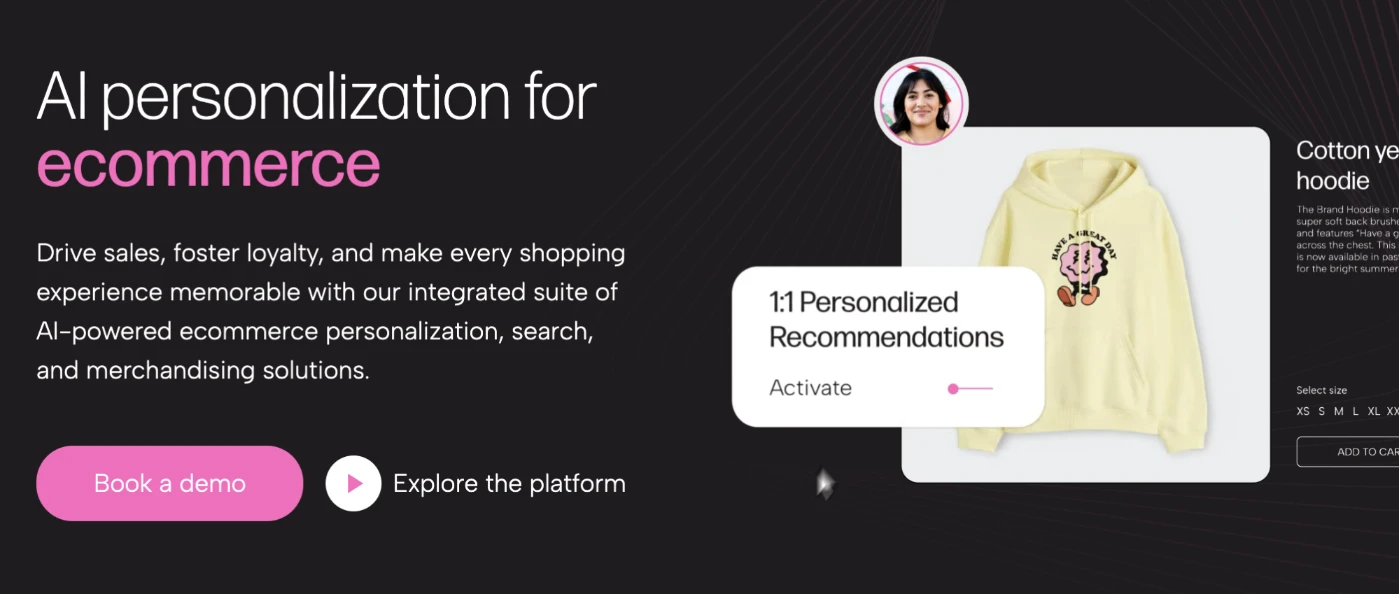
UGC technology now operates within Nosto’s Commerce Experience Platform, where it powers shoppable UGC and AI-driven personalization.
Nosto uses behavioral data, AI ranking, and testing capabilities to surface the most relevant user-generated content for each shopper. The focus shifts from simple aggregation to optimization, making sure UGC supports search, merchandising, and conversion goals across the buying journey.
These platforms help brands monitor conversations, moderate content, and optimize UGC performance across channels at scale.

Hootsuite goes beyond publishing into social monitoring, analytics, and AI-assisted moderation. In UGC-heavy environments, its unified inbox, social listening, and automated routing tools help teams filter conversations, detect sentiment, and prioritize responses at scale.
Its real strength is visibility and control. It centralizes engagement, performance data, and optimization workflows across channels so teams aren’t juggling separate tools.
Sprout Social focuses on social listening, engagement, and advanced analytics to help teams understand performance at scale. It brings publishing, inbox management, and listening data into unified dashboards, using AI to surface sentiment, trends, and actionable insights.
Its real value lies in proving the business impact of social and UGC through structured, enterprise-grade analytics.

Brandwatch sits at the intelligence and listening layer of social and UGC strategy. It analyzes large-scale digital conversations across platforms, using AI to detect sentiment shifts, cluster emerging topics, and surface trends in real time.
Its real value is foresight. Brandwatch helps brands anticipate perception changes, manage risk, and adjust content strategies before issues escalate. Unlike engagement platforms, it focuses on large-scale consumer intelligence across forums, news, and the open web, not just owned channels.

Modulate operates at the real-time voice safety layer of digital communities. Through its VELMA platform, it analyzes live voice interactions to detect harassment, hate speech, and behavioral risk as conversations happen.
The focus is proactive protection. It helps brands and platforms maintain safer interactive environments without relying only on text moderation.
OpenAI provides foundational AI models and APIs rather than a standalone UGC platform. Its language and multimodal models can be integrated into internal systems to automate scripting, caption generation, tagging, moderation support, summarization, and content analysis at scale.
Its real strength is adaptability. It gives teams the flexibility to build custom UGC workflows tailored to their own data, channels, and compliance requirements.
Choosing AI UGC tools isn’t about picking one platform. It’s about building a stack that supports your growth model. The right setup depends on your primary objective, how much automation you can responsibly implement, and how well new tools fit into your existing workflow.
Below is a simplified decision framework:
AI UGC adoption accelerated as content demand intensified across social, paid media, and community platforms.
Besides, AI UGC fits extremely well for short-form video.
This type of content now dominates time spent on social media and delivers the highest ROI of any content format, according to HubSpot.
Still, paid campaigns need constant creative refresh. Community-led brands operate in ongoing conversations, not seasonal bursts. That sustained demand for volume and variation pushed teams toward automation.
UGC collection used to be manual: screenshots of reviews, direct messages for permissions, spreadsheets tracking usage rights.
Now, platforms use machine learning to automatically aggregate, tag, and filter content. AI can:
This cuts down on manual moderation and sorting while making reuse at scale much easier. Social teams shift from chasing content to managing structured pipelines.
The shift isn’t about replacing people. It removes repetitive tasks so teams can focus on creative testing and strategy.
AI has changed production, too.
Brands use it to turn real testimonials into structured short-form videos, generate ad variations, and reformat content for placements like Instagram Reels or TikTok-style feeds.
Instead of sourcing dozens of creators for small variations, teams can:
This makes personalization possible without one-to-one creator sourcing, which is especially valuable for paid social teams managing high-volume campaigns.
Scale brings more scrutiny.
Platforms reward content that drives authentic engagement and may limit distribution of overly synthetic material. Disclosure expectations around AI-modified or fully generated content are tightening, especially in regulated industries.
If content doesn’t feel human, engagement drops, no matter how polished it looks.
Here’s another good example we created:
Take it from us:
AI UGC performs best when real voices stay central and AI supports structure and efficiency.
In 2026, authenticity drives engagement signals. Automation supports execution.
AI UGC has moved from a (solid) growth tactic to operational infrastructure.
It all starts from trust. In crowded feeds, traditional branded ads struggle to hold attention. User-generated content continues to outperform polished creative because it comes with built-in social proof. At least it does for 85% of consumers.
When AI strengthens that trust layer instead of replacing it, brands gain scale without sacrificing credibility.
Performance is what’s driving adoption.
UGC-based ads tend to deliver stronger engagement and lower acquisition costs than brand-led creative. AI supports this by generating structured variations from existing testimonials, reviews, and creator clips. Instead of waiting weeks for new assets, teams can test hooks, formats, and messaging angles in days.
The impact:
Iteration speed becomes a measurable advantage.
Traditional influencer programs require constant sourcing, negotiations, and coordination.
AI-assisted workflows reduce reliance on continuous new production. Existing UGC can be reformatted, refreshed, and localized across channels without reshooting content.
Instead of expanding headcount, brands increase output through structured creative reuse. Creators still play a central role, but each asset delivers more value across placements.
Always-on media demands steady creative rotation.
AI enables:
For performance teams, momentum depends on consistent variation. AI UGC makes that consistency operational.
AI UGC works best when clear guardrails are in place. Without structure, automation can chip away at credibility. With the right oversight, it strengthens both performance and trust. The goal isn’t maximum output. It’s sustainable impact across paid and organic channels.
AI can speed up production, but human oversight is still essential.
Maintain structured review cycles to confirm:
When working with creators or customers, keep feedback loops open. Automation should refine content, not override authenticity or context.
Disclosure expectations continue to evolve across platforms and industries.
If you’re using AI avatars, voice cloning, or heavily modified content, make sure you align with advertising standards and platform policies. In regulated industries, endorsement and claim transparency are especially critical.
Clear disclosure protects long-term credibility.
Views equal visibility. They don’t equal performance.
Track:
Use analytics to connect UGC performance to real business outcomes. Trust and revenue should move together.
AI UGC enables scale, but misuse can weaken the very trust it’s supposed to build. When automation overtakes authenticity, audiences and platforms respond.
AI UGC is moving toward deeper personalization and tighter platform integration. The advantage won’t come from using more tools. It will come from building systems that turn authentic content into measurable performance.
Collecting UGC isn’t enough. The real leverage comes from activating it across paid media, social, and ecommerce with clear structure, disciplined testing, and continuous creative iteration.
Need even more support?
At inBeat Agency, we help brands connect the right AI tools with the right performance-driven creators to build scalable UGC systems that actually convert. From sourcing and production to activation and optimization, we focus on turning AI-enhanced content into measurable growth.
Book a call to explore what that could look like for your team.
AI UGC refers to user-generated content enhanced by artificial intelligence. Instead of replacing customer voices, AI supports content creation, tagging, moderation, and optimization. That can include auto-captioned videos, sentiment analysis of customer reviews, or generating structured ad variations from real testimonials.
It depends on the source. If the core content comes from real customers and AI simply improves formatting or distribution, it’s generally considered authentic. Fully synthetic content, like scripted testimonials without real users, requires disclosure and can reduce trust if it feels misleading.
Top tools span creation, management, and analytics. Examples include AdCreative.ai and Creatify for AI video production, Dash Social and Stackla for UGC platforms, and Hootsuite or Brandwatch for AI-driven analytics and sentiment analysis. The right choice depends on your workflow, scale, and campaign goals.
No. AI can speed up editing, localization, and testing, but real creators are what drive social proof and community credibility. AI improves scale and efficiency. Human voices build trust.
Yes, when used responsibly. Prioritize transparency, respect media rights, follow platform policies, and avoid fake reviews or misleading synthetic testimonials. With proper oversight, AI UGC can strengthen conversion rate performance without compromising compliance.
