
If you’re serious about content creation in 2026, having a solid UGC portfolio is essential.
Here’s the tricky part:
Most creators don’t actually know what brands want to see in a UGC portfolio. Some lean heavily on aesthetics but offer little context. Others include too much without structure. The result is often a missed opportunity to support brand awareness or demonstrate fit for real marketing campaigns.
And here’s the hard truth:
Brands aren’t scanning follower counts. They’re looking for proof. Can you create consistently, tell a clear brand story, and adapt your content for social media and paid placements? That’s what separates a strong portfolio from a generic one.
This is a good example to start with (and yes, the portfolio allows you to click on those clips):

This guide walks you through what to include in your UGC portfolio, how to structure it, where to host it, and why clarity matters more than style alone, whether you’re a creator or a brand reviewing user-generated content at scale.
User-generated content (UGC) includes photos, videos, reviews, and other media created by real people to showcase products or experiences. In modern digital marketing, UGC is intentionally designed to feel native, especially across social media marketing channels and e-commerce environments.
Brands use UGC in ads, websites, email, and organic social, like so:
Compared to studio visuals, UGC improves trust, shortens the customer experience, and supports brand activation across channels. It also allows teams to scale content ideas faster while preserving authenticity.
Nearly 79% of consumers say UGC impacts purchasing decisions, making it a powerful driver of conversion and brand loyalty. That’s because 92% of consumers trust word‑of‑mouth and user‑generated content more than traditional advertising, highlighting how powerful authentic peer content is compared with brand‑produced messages.
However, trust and persuasion start with alignment.
A strong UGC portfolio helps brands evaluate brand perception, storytelling skills, and alignment without relying on influencer reach.
We’ll discuss these benefits in a second. Now, let’s look at:
UGC creators and influencers are often mentioned together, but they serve different roles in digital marketing:
Because UGC creators are evaluated on production skills, content style, and alignment with brand guidelines, not on audience size, a focused UGC portfolio has become the main decision-making tool for brands sourcing high-performing creator content that supports long-term brand awareness.
A strong UGC portfolio does more than showcase your work. It removes doubt, builds trust, and helps brands say yes faster, especially if you’re just starting out and working to build brand awareness.
Brands want real proof of your skills. A portfolio lets them see your UGC content, editing style, and platform fluency without needing a big follower count. They can judge your content creation skills directly and assess fit with their brand voice and brand identity.
And that trust factor is real: research from Think with Google shows that creator content drives 1.3 times higher advocacy and stronger consumer impact than studio‑produced ads, largely because people find creators more authentic and relatable.
Busy marketing teams don’t want to scroll your feed or ask for samples. A clean UGC portfolio answers key questions fast:
Less guessing = faster green lights and smoother brand management decisions.
If you’re just starting out, your portfolio is often more valuable than past deals. A few polished, well-labeled samples can speak louder than a resume. Brands care about your skill and consistency, not your follower count.
Clarity is the foundation of an effective UGC portfolio. Knowing who it’s for and what you want it to achieve makes everything else easier and supports long-term brand consistency.
If your portfolio tries to do everything, it often does nothing well. A clear purpose keeps your content focused, relevant, and aligned with the right marketing tactic or brand goal.
For example, this creator focuses on health and wellness:
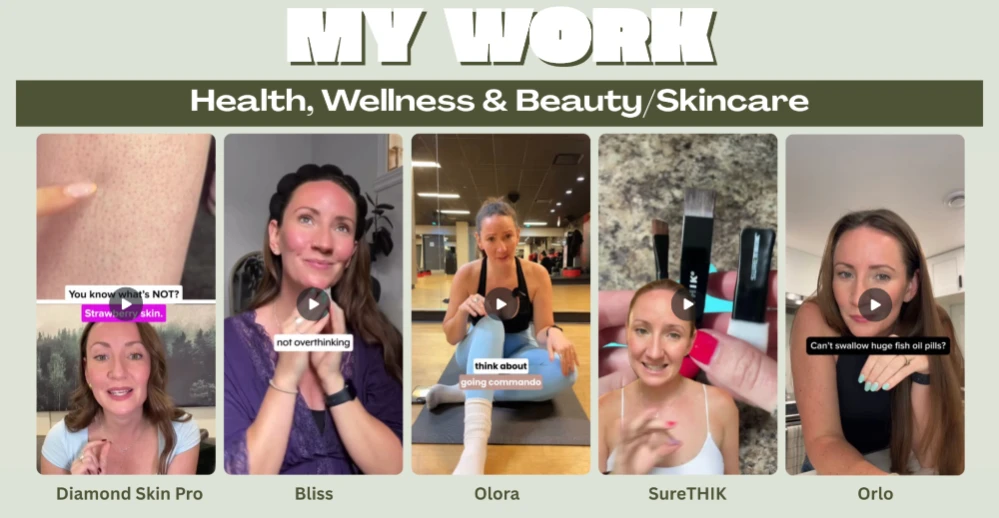
Before you add anything, decide who your portfolio is meant for. That choice shapes what content to include and how you position it.
Trying to please everyone usually backfires. A focused portfolio that speaks to one audience builds trust faster, improves brand perception, and makes decisions easier.
What do you want your portfolio to do right now?
Your goals should guide what stays and what gets cut. Don’t overload it. Instead, feature UGC that backs up your purpose. The stronger your intent, the stronger your results.
Good organization helps brands “get it” fast. A clear UGC portfolio makes your value obvious, removes guesswork, and speeds up yeses from busy teams working across marketing tools and marketing campaigns.
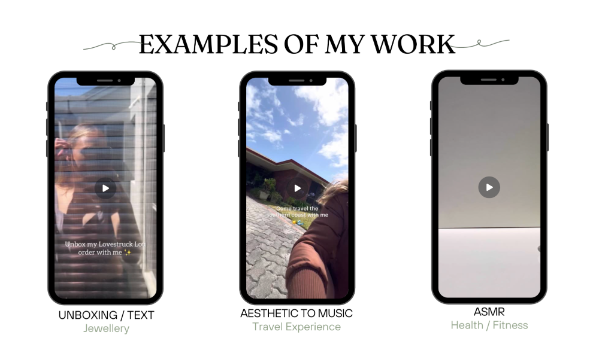
Your portfolio isn’t a storage bin. It’s a highlight reel.
A curated selection shows confidence and helps position you as a specialist, not just another generalist, while reinforcing brand identity.
How you present your content matters just as much as the content itself.
Strong structure = strong impression.
It shows you understand how brands assess UGC and makes reviewing your portfolio fast and frictionless.
Client testimonials give your UGC portfolio credibility, especially if you’re just getting started. They build trust, support brand awareness, and help brands feel more confident working with you.
Here’s a neat example:
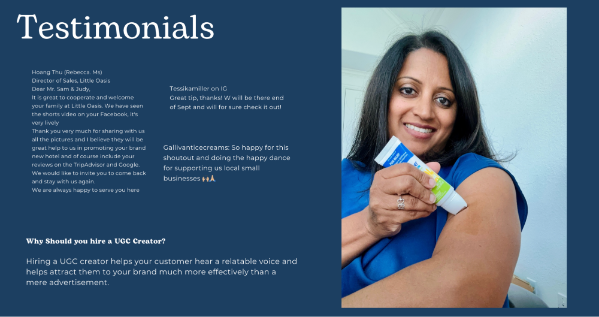
You don’t need big-name case studies to start, just smart timing and simple prompts.
Even a single line of real feedback can go a long way when used with intention.
Where and how you show testimonials make a difference.
Your USP is what makes your UGC portfolio memorable. It’s not just about what you create, but why brands should choose you as part of their brand activation efforts.
Tyler, for example, makes his portfolio memorable by featuring the hook in the title: “I quit my 9-5?!”

Your USP doesn’t have to be dramatic. It just needs to be specific, clear, and true.
Start with a few simple questions:
Some of the best USPs sound small, but they solve real problems:
Practical always beats flashy here.
Once defined, make sure your USP is easy to spot.
When brands instantly understand your edge, they decide faster and with more confidence.
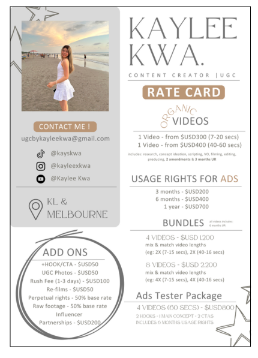
Including a rate card in your UGC portfolio sets clear expectations before brands reach out. It shows you understand value, usage, and scope. In the long run, these skills support smoother brand management and stronger marketing campaigns.
Below is a good example of a rate card if you want to set your UGC prices, though you can also check out these TikTok influencer rates.
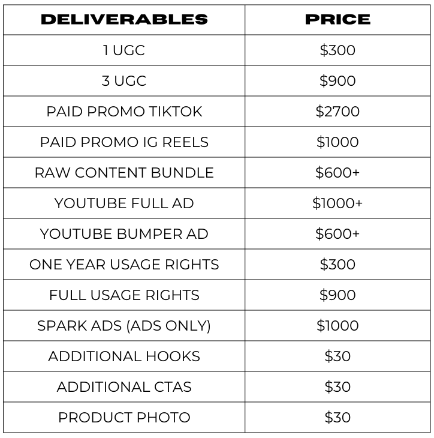
Begin with a clear core offer, like: one 15–30 second UGC video, fully edited for organic use.
This makes it easy for brands to assess fit without confusion.
Brands often need extras. Spell them out upfront to avoid assumptions.
Bundles (like 3–5 videos) at a slightly discounted rate encourage larger projects without overcomplicating pricing.
A clear rate card builds trust, saves time, and helps brands go from curious to booked faster while reinforcing brand perception.
You can see how this creator sets bundles and add-ons below:
A standout UGC portfolio doesn’t just show visuals. It lets brands see how you think, create, and connect with audiences in ways they can trust.
Storytelling helps brands see the creator behind the content, not just the final video or image, and supports long-term relationships.
Here’s how one UGC creator decided to do it:
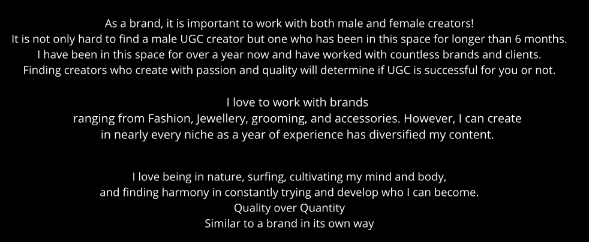
Provide light personal context without oversharing:
These small insights show how you think, which is just as important as what you make.
Avoid overly polished explanations or promotional language. Honest notes about your process, written in a natural voice, feel more credible and relatable. That builds trust faster than rigid, scripted portfolio copy and improves brand perception.
You don’t need a dramatic storytelling arc. Simple cues like clarity, curiosity, or enthusiasm make your portfolio memorable. These emotional signals suggest that your content can connect with real audiences and support a stronger brand identity.
With UGC portfolios, less is usually more, and you can see a great example of this below:
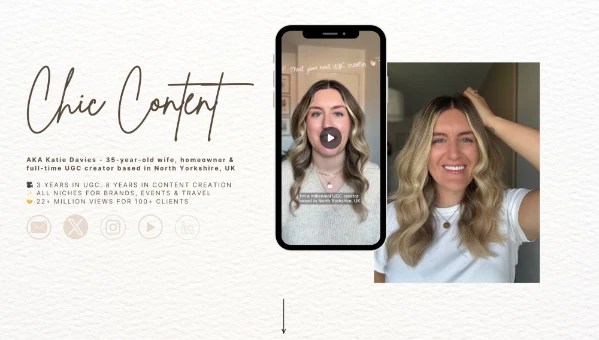
A tight set of strong samples trumps a long, unfocused list and supports clearer brand consistency:
Think of your portfolio as a living asset, not an archive, and one that reinforces positive brand perception over time.
Different brands value different things:
Show the work that aligns with the type of projects you want next.
A portfolio shouldn’t get stale.
Update when:
Newer, stronger samples deserve the spotlight over older ones and help maintain brand consistency and positive brand perception.
Frequent, small updates keep the portfolio effective, support brand awareness, and reduce long-term cleanup stress.
Your portfolio can be more than a gallery. It can connect and convert by supporting brand activation and long-term brand loyalty.
Make it easy for people to explore more of your work:
These help brands, agencies, and peers see your style across environments.
Every comment, message, or inquiry is an opportunity:
Responding professionally reinforces trust, improves the customer experience, and signals that you’re easy to work with long term.
The UGC platform you choose affects how quickly brands can review, understand, and share your work, especially across marketing campaigns and social media.
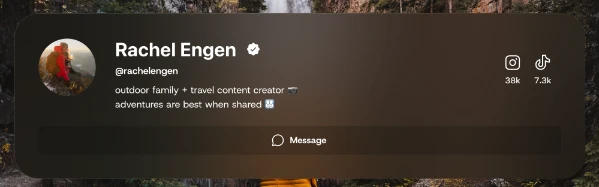
For example, this creator makes it easy to browse her work:
Here’s how they stack up:
Prioritize fast loading, mobile friendliness, and easy navigation. Brands should grasp your work immediately.
Good design doesn’t impress. It clarifies while supporting clear brand design decisions. Luckily, platforms like Canva offer plenty of options for UGC creators:
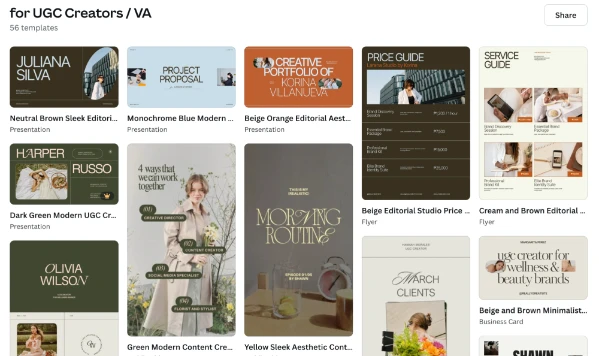
Keep things readable:
Avoid clutter, wild fonts, or busy visuals that distract from your content. A clean layout helps maintain brand consistency and a recognizable visual style.
Remember that mobile first is essential, as many reviewers will open your portfolio on phones or tablets through social media or email links.
Visuals should help explain your work, so:
Make it obvious how brands can contact you:
These turn your portfolio from a gallery into a business tool.
Before browsing portfolios, brands need to define what they’re actually looking for. Without clear filters, discovery becomes a slow, subjective guessing game that can weaken brand management and delay marketing campaigns.
We advise you to start with a discovery brief.
Basically, create a simple internal doc that clarifies what makes a creator the right fit for your campaign. Then, you can evaluate portfolios against your brief, instead of trying to fit your guidelines to creators you like.
This one step saves time, reduces back-and-forth, and turns portfolio review into a smart, streamlined process.
That brings us to the next point:
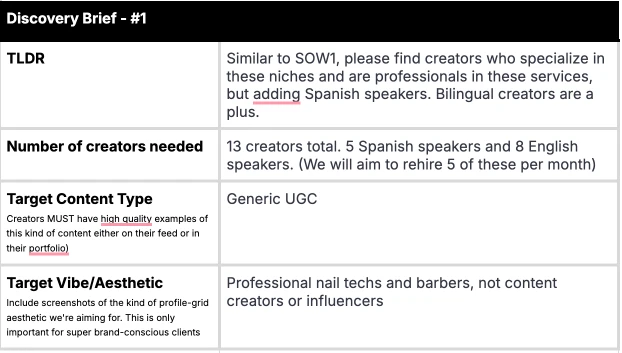
Here’s how two real discovery briefs shift how brands evaluate creator portfolios:
Discovery Brief #1 prioritizes demographics and relatability (language, profession, platform behavior). Portfolios are evaluated on real-world authenticity, not influencer reach.
Discovery Brief #2 prioritizes job-based credibility and brand safety. Here, hands-on experience and tone matter more than niche authority.
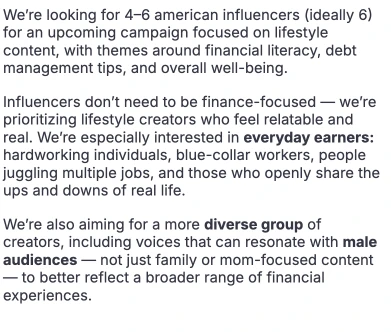
In both cases, examples of ideal creators are included. This visual clarity speeds up decisions and helps everyone stay aligned.
When reviewing UGC portfolios, focus on fit, not followers.
Bonus: A well-organized portfolio usually signals a reliable creator.
A strong UGC portfolio is only the starting point. What really drives results is knowing how to activate creator content across paid media, social, and performance-driven campaigns.
For brands, that means working with creators who don’t just look good on camera but understand how content supports real business outcomes.
At inBeat Agency, we help marketing teams source high-performing creators, build UGC systems that scale, and turn authentic content into measurable growth. From creator strategy to execution, we focus on what actually moves the needle.
If you’re ready to go beyond collecting UGC and start using it strategically, get in touch today, and let’s build campaigns that perform.
Start with a short intro, 5-10 high-quality UGC samples, and a clear context for each (content type, platform, and goal). Focus on content creation basics like product demos, short-form videos, or lifestyle clips. Add basic contact details and, if you can, include light social proof like DMs, comments, or early feedback.
Not at all. Many creators build strong portfolios using products they already own or from mock briefs. Brands care more about quality, alignment, and storytelling than your brand deal history. Solid content outweighs experience in many cases.
Notion and Google Drive are great beginner-friendly options. They’re quick to set up and easy to share. As you grow, a simple website or dedicated portfolio tool can offer more polish and a stronger brand presence.
Every 2-3 months is a good rhythm, or whenever you finish a project that reflects your best work. Swap out weaker samples, stay aligned with platform trends, and keep your content current.
Brands look for content that feels relevant, well-made, and aligned with their voice. They focus on fit, not follower count. Portfolios that are clear, consistent, and easy to scan tend to win more work.
