
UGC and influencer marketing are two of the most talked-about strategies in digital marketing right now. The brands winning big know exactly when and how to use both for maximum impact.
If you’re unclear about the difference or the right approach for your brand, you may be missing out on significant growth. But don’t worry. In this guide, we’ll break down:
P.S. Not sure if your next campaign needs UGC creators, influencers, or both? inBeat Agency designs strategies that combine authentic content with targeted reach. They source vetted creators, manage partnerships, and optimize campaigns for results.
User-generated content (UGC) is any authentic content that features a brand but is created outside the company’s in-house marketing team.
It usually comes in two forms.
The first meaning of UGC is organic content from real users, things like customer reviews, social media posts, or destination reviews shared without a brand request. The second meaning of UGC is assets from professional UGC creators.
These content creators work with brands to produce authentic photos, videos, or social media posts that align with the brand’s values and style. And yes, sometimes they’ll be following a creative brief.
For example, haircare brand Prose works with UGC creators to produce authentic content for its social feeds, while still encouraging real customers to share their own product experiences.
User-generated content comes in many formats, and each one plays a different role in how people research, trust, and choose products. Some types help with quick decisions, while others build confidence over time.
Here are the most common types of UGC that brands manage today and why each one matters:
Reviews and ratings are often the first thing people check before buying. They give direct feedback from real customers and help answer basic questions about quality, fit, and value. Because they come from everyday users, they feel honest and easy to trust.
This trust is clearly reflected in buying behavior, since shoppers rank reviews as one of the most convincing forms of customer content. In fact, 78% say reviews influence their purchase decisions. That level of impact explains why reviews remain one of the strongest UGC formats across product pages and social platforms.
Photos and short videos shared by customers show how a product works and what it looks like in real life. Unlike polished brand visuals, this type of content feels natural and relatable, which makes it easier for people to imagine using the product themselves.
This also helps brands from a cost angle, since many marketers believe visual UGC performs better without high production costs. Around 85% of marketers say photos and videos from users cost less and work better than professional visual content, which makes this format both practical and effective.
Brands usually work with creators who produce content that looks organic and fits social feeds naturally. When this content is reused on brand websites, ads, or social profiles, it helps keep messaging consistent while still feeling human.
Because creator UGC is built for platforms people already use daily, it blends in better than traditional brand posts. It also leads to stronger engagement across owned channels.
Social platforms are full of short-form UGC, such as Instagram Stories, TikTok challenges, and casual posts showing products in action. These formats work well because they follow trends and platform habits, without forcing promotional messages.
As a result, product mentions feel more like everyday content than ads. This helps brands stay visible without pushing too hard.
Long-form UGC includes detailed reviews, unboxing videos, and destination-style content. This type of content supports people who want deeper information before making a decision.
It answers follow-up questions, shows real usage over time, and adds context that short posts cannot. While it takes longer to consume, it plays an important role in helping buyers feel confident about higher-value or experience-based purchases.
Now that we’ve covered what UGC is and where it comes from, let’s look at why brands rely on it and the benefits it can deliver.
UGC feels more genuine than polished brand-created content or even influencer content. Social media posts from real users or UGC creators often show products in real-life situations, which builds social proof. That social proof builds stronger credibility and can lift your engagement rate across social platforms.
In fact, about 92% of consumers trust content created by real users more than traditional advertising, because it feels more authentic and believable.
Working with UGC creators or sourcing content from real users can cost far less than high-end influencer campaigns. You can repurpose this authentic content across multiple marketing channels, from Instagram Story ads to retargeting ads, without high creative costs.
In many cases, UGC-based ads achieve up to four times higher click-through rates and 50% lower cost-per-click compared to standard ads.
Featuring customer reviews, photos, or stories can turn satisfied users into brand advocates. 84% of people are more likely to trust a brand that uses UGC, and 79% say it influences their purchasing decisions. That kind of connection strengthens your community and word-of-mouth reach.
UGC can improve site functionality and visibility. Search engines value authentic content and frequent updates, whether that’s customer reviews on product pages or fresh videos from content creators. UGC can also support your marketing funnel by improving keyword coverage and helping with conversion tracking.
In fact, campaigns with UGC see a 29% lift in web conversions, and including user-generated content in e-commerce product pages can increase conversions by 161%.
UGC creators can become more than just content suppliers; they can be part of your brainstorming process. You can bring them into discussions about how to promote your app, what features to highlight, or what messaging will resonate with your target audience.
Asking for and implementing their ideas helps extend your marketing team’s capabilities and unlocks valuable insights from people who understand what engages real users.
While UGC can be a powerful asset, it also comes with challenges that brands need to manage carefully. Let’s see what you might face.
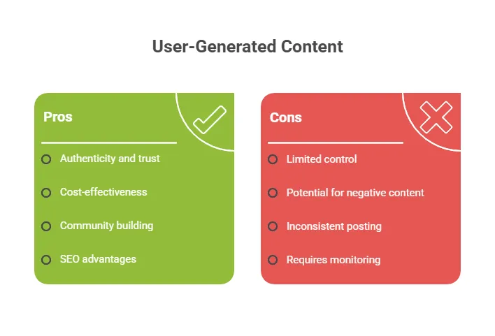
When content comes from real users or UGC creators, you can’t always control lighting, editing style, or overall production value.
Even with a creative brief, some submissions may not align with your brand standards or the quality you expect for paid media campaigns and marketing channels. The best approach is to provide clear brand guidelines and sample references to guide content creation.
Here’s a good example of an arguably not-so-good TikTok clip:
As you can see, the creator keeps dropping his mic, and the background is cluttered. Besides, the creator seems to have trouble getting dressed in the Gymshark Onyx that he’s promoting.
Of course, a certain degree of disconcertedness/ timidity can be intentional and even appealing in some scenarios. This approach can humanize the creator, but only if it’s done right.
Not all social media posts or customer reviews will work in your favor. Some might highlight product issues, misunderstand your messaging, or feel off-brand. If these gain traction on social platforms, they can impact brand awareness and audience perception in ways you didn’t intend.
Relying on organic UGC means content flow can be unpredictable. You might see a surge of social media posts after a product launch, followed by weeks of silence.
This inconsistency can disrupt your content strategy, audience reach, and the momentum of your marketing funnel. A simple fix is to mix organic submissions with planned content from UGC creators to maintain steady output.
UGC needs constant oversight to maintain quality and protect your content rights. This includes reviewing submissions, approving what goes live, and ensuring alignment with brand guidelines. Without this active moderation, off-brand material could appear in your brand channels or social feeds.
Influencer marketing is a digital marketing strategy where brands collaborate with individuals who have built strong credibility, audience reach, and influence on social platforms. These influencers share branded content directly with their followers, engaging in real conversations and building relationships that go beyond a single campaign.
Unlike UGC creators, who produce authentic-looking content for brands to use on their own marketing channels without posting it themselves, influencers promote products through their personal social feeds.
For example, New Balance partnered with inBeat Agency to work with athlete influencers across different California cities to create videos and photos promoting new in-store products. Each influencer had a strong local community, which aligned perfectly with the brand’s identity and values.

Influencer marketing is usually grouped by follower size, but reach is only one part of the picture. Each influencer tier brings a different balance of scale, trust, cost, and content style.
So, understanding these differences helps explain why some brands lean more on influencer campaigns, while others focus on UGC or a mix of both. Here are the types of influencers you might come across:
Mega influencers, typically celebrities or internet-famous figures, have over 1 million followers. Their main strength is reach, since a single post can put a brand in front of a massive audience in a short time.
However, this scale usually comes with a much higher cost per campaign. Engagement can also feel less personal, which means these creators are often better suited for awareness-focused campaigns rather than trust-driven UGC-style content.
Macro influencers fall between 100,000 and 1 million followers. They still offer strong reach but usually focus on a clearer niche, such as fitness, fashion, gaming, or travel.
Because of this focus, their audiences tend to be more relevant to specific brands. Many campaigns use macro influencers when they want a balance between visibility and engagement without paying celebrity-level fees.
Micro influencers have between 10,000 and 100,000 followers and are known for closer relationships with their audience. Their content usually feels more personal, and followers are more likely to interact through comments, replies, and shares.
This makes micro influencers a common bridge between influencer marketing and UGC. That's because their posts often look and feel like everyday user content while still being part of paid collaborations.
Nano influencers have under 10,000 followers, but their audiences are typically highly engaged. These creators usually talk to people they know personally or share strong common interests with their followers.
Because of this, nano influencers are often seen as trusted voices rather than promoters. Brands frequently work with them as advocates or community partners, especially when the goal is authentic UGC that feels natural and local rather than promotional.
Now you must be wondering why brands continue to work with influencers year after year. Let’s break down the key advantages.
Influencers let you scale brand awareness and still connect with niche audiences. Mega or celebrity influencers create global awareness, while macro and micro influencers can target specific audience demographics.
Research shows nano‑influencers (1K–10K followers) deliver average engagement around 2.7%, while micro‑influencers (10K–50K followers) bring in about 1.8%. That’s significantly higher than macro or celebrity tiers. So, if you’re chasing authentic engagement alongside reach, these smaller creators hit the sweet spot.
Most influencers are experienced content creators who know how to produce polished videos, photos, and social media posts that fit your brand guidelines.
Whether it’s an Instagram Story demo, a TikTok challenge, or a YouTube product review, influencer content often matches the quality of brand-created content. And it has the added benefit of personal authenticity (if done right).
Working with niche influencers builds trust fast. Around 63% of shoppers are more likely to buy when a trusted influencer recommends something. When influencers, from beauty creators to tech reviewers, offer genuine endorsements, their social proof can deepen long-term loyalty and positively affect conversion rate.
Influencer marketing works for both one-off promotions and ongoing media campaigns. You can run small-scale collaborations with nano influencers for local reach or launch multi-platform campaigns with macro and celebrity influencers for broader impact.
This flexibility allows you to adjust content production, budget, and audience reach based on campaign goals.
While influencer marketing can be highly effective, it also comes with challenges brands need to keep in mind.
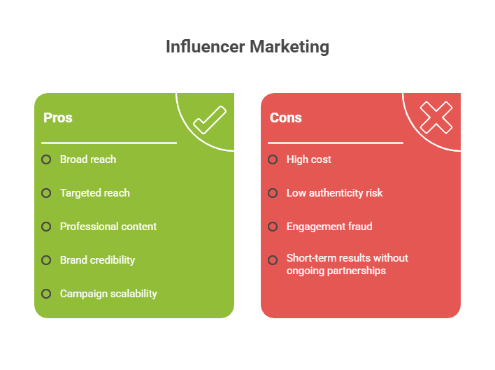
Mega or celebrity influencers can deliver huge audience reach, but their rates are out of range for smaller budgets. Campaign costs can climb quickly, especially when factoring in content rights and paid media. We suggest balancing your influencer mix with macro or micro influencers who can still deliver strong engagement rates at a lower cost.
For example, Hurom mixes smaller influencers like Tami Vargas, with 49.300 followers at the time of this writing:
With larger influencers like spiritual coach Diana K. Levy:
If an influencer’s style, audience demographics, or values don’t align with your brand, the content can feel forced. This hurts both engagement rate and conversion rate. The best fix is to vet potential partners carefully, review their past influencer content, and ensure they genuinely use or value your product.
One-off influencer campaigns can create quick spikes in brand awareness but may not lead to long-term customer loyalty. A better approach is to build ongoing relationships or brand ambassadorships, so the influencer becomes a consistent advocate in your marketing funnel.
As we pointed out above, Hurom works with a network of global ambassadors who continuously create influencer content. This keeps them visible across different social platforms year-round.

Some influencers inflate numbers with fake followers or automated engagement, which can skew campaign results. This wastes budget and affects conversion tracking accuracy.
The fix? Tap into trusted influencer marketing tools that alert you to red flags. Tools like HypeAuditor or Impulze.ai analyze engagement rate vs. follower growth, detect bots, and flag suspicious spikes so you only partner with genuine creators.
UGC and influencer marketing may both use content creators, but their roles, methods, and impact are quite different.
UGC comes from real users sharing organically or from UGC creators hired to produce authentic-looking content. UGC creators usually don’t post it on their own feeds; instead, brands use it on their marketing channels, paid media, or product pages.
Influencers, in contrast, share branded posts directly with their followers, actively engage in the comments, and integrate promotions into their personal content strategy.
UGC creators are generally more affordable because they’re paid for content production instead of audience reach.
Whereas influencer rates factor in their follower count, engagement rate, and niche authority. This means macro and mega influencers can command a much higher price.
For launches or awareness pushes, influencers may require larger budgets, while UGC creators can deliver high-converting assets at scale for less.
With UGC from real users, brands have little control over the style, messaging, or quality; it’s authentic but unpredictable. However, with UGC creators, you usually have more say through creative briefs, brand guidelines, and full content rights.
Influencers, on the other hand, maintain more creative freedom to keep their voice authentic for their audience. This means influencer content might feel less scripted, but you’ll need to trust their delivery and tone.
UGC creators provide assets that you can place across your own marketing channels. This allows precise targeting through paid ads, landing pages, packaging, or in-store displays.
Influencers have a built-in audience and distribute content directly to their followers. This lets you tap into niche markets quickly, whether that’s beauty influencers for skincare, tech reviewers for gadgets, or chefs for kitchen products.
As Brittany Garlin, Forbes Councils Member, explains, this distinction is also tied to their follower requirements:
“Unlike traditional influencers who build up a large following before working with brands, UGC creators don't require tons of followers. Basically, UGC creators are like freelance influencers who specialize in creating UGC-inspired material that is paid for by brands to be shared on the brand's own channels.”
UGC performance is tracked through your brand’s analytics. You can see how it affects click-through rates, conversions, or dwell time across your funnel.
In contrast, influencer marketing is measured by post impressions, engagement rate, discount code redemptions, and UTM tracking. Influencers are often better for brand awareness and relationship marketing. UGC is often used to fill specific content gaps in the marketing funnel and increase conversion rate.
UGC usually feels more casual and natural because it mirrors how everyday people post online. This makes it blend into feeds easily and feel less like a paid promotion. When working with UGC creators, brands can still guide the outcome through briefs, examples, or talking points, which helps keep content aligned while preserving a real look.
Influencer content usually feels more polished since it reflects the creator’s personal style and online image. That familiarity can work well when brands want to appear as part of a lifestyle rather than a product placement.
The trade-off is that brands usually have less influence over tone and presentation, since influencers protect their voice to stay credible with their audience.
UGC campaigns are typically faster to launch and easier to repeat. Brands can work with several UGC creators at once to produce multiple videos or images in a short time, which is helpful for testing ads or refreshing content libraries. This makes UGC a strong option when speed matters or when teams need a steady flow of assets.
Influencer campaigns usually move at a slower pace. Content timelines depend on creator availability, approvals, and posting schedules. While influencer posts can bring strong visibility, they require more coordination and are harder to scale quickly across many variations.
UGC agreements often focus on content ownership and usage across brand channels. In many cases, brands receive broad rights to reuse the assets in ads, emails, landing pages, or social posts. This makes UGC especially useful for long-term campaigns and paid media testing.
Influencer agreements tend to be more specific. Usage length, platform limits, and paid amplification terms can vary from one deal to another. Because of this, influencer content may have more restrictions, which is why reviewing usage terms upfront is an important step when planning larger campaigns.
UGC marketing and influencer marketing both rely on creators, but they solve different problems. One focuses on scalable content that supports performance and conversions, while the other leans on reach, trust, and visibility through established audiences.
The right choice depends on your goals, budget, and how you plan to use the content after it’s created.
UGC marketing works best when you need believable content that works across many touchpoints, from ads and emails to product pages. It’s a strong option for brands that want flexibility, faster testing, and long-term value from each asset.
Great fits:
Smart ways to use it:
Things to watch out for:
Influencer marketing is a better fit when reach, credibility, and storytelling matter most. It helps brands enter new spaces, build awareness quickly, and borrow trust from creators who already have an audience.
Great fits:
Smart ways to use it:
Things to watch out for:
A strong UGC content strategy helps you get consistent, usable content that supports trust and conversions. The steps below keep the process simple, repeatable, and easy to scale.
Start by deciding what the content should achieve. Some brands want higher conversion rates on product pages, while others need fresh ads for paid social or content for emails. The goal shapes everything that follows, including formats, creators, and where the content will be used.
Pick the type of UGC that fits your goal. Short videos work well for ads and social feeds, while reviews and testimonials support product pages and SEO. For demos or tutorials, video usually works better than images. This step helps avoid collecting content you won’t actually use.
Look for creators who match your customer profile rather than just people with experience filming content. Clear briefs matter here. So, try to explain the product, key talking points, do’s and don’ts, and where the content will be used. A good brief keeps content consistent while still feeling natural.
One creator can usually produce several versions of the same idea. Asking for different hooks, use cases, or outcomes gives you more testing options later. This also saves time and budget compared to sourcing new creators for every variation.
Before content is delivered, confirm how and where it can be used. This includes ads, emails, product pages, and social posts. Clear usage terms protect your budget and prevent limits when you want to scale winning assets.
Once the content is live, track performance across channels. See which visuals, hooks, or messages lead to better results. Strong UGC can be reused across campaigns, while weaker content helps guide better briefs next time.
UGC works best when it stays current. Rotating creators, formats, and messages helps content feel fresh and believable. Regular updates also prevent ad fatigue and keep your brand visible across touchpoints.
To help you out even more, we've created this free checklist that you can use:
An influencer campaign works best when it’s planned around clear goals, the right creators, and simple tracking. The steps below help you run campaigns that stay focused and easy to manage.
Start with a single main goal. This could be brand awareness, traffic, sales, or content creation. A clear goal helps you choose the right influencers, platforms, and formats. Trying to do everything at once usually leads to mixed results.
Be clear about who you want to reach. Think about age, interests, location, and buying habits. This makes it easier to choose influencers whose followers already match your ideal customer, instead of relying on follower count alone.
Pick influencers based on your goal and budget. Nano and micro influencers usually work well for trust and engagement, while macro or mega influencers are better for reach and visibility. The right fit matters more than size.
Decide where the campaign will live. Short videos may work best on TikTok or Instagram, while longer reviews fit YouTube or blogs. Matching the format to the platform helps the content feel natural to the audience.
Share clear guidance with influencers. This includes key talking points, product details, posting deadlines, and any rules to follow. Leave room for their personal style so the content feels real and not forced.
Confirm what the influencer will post and how frequently. Also agree on where the content can be reused, such as ads or brand channels. Sorting this out early avoids confusion later.
Use links, discount codes, or platform insights to see how the campaign performs. Look at reach, engagement, traffic, and sales based on your original goal. This helps you understand what worked and what didn’t.
After the campaign ends, review the results and feedback. Strong performers can become long-term partners, while weaker results help shape better plans next time. Each campaign should make the next one easier and more effective.
UGC and influencer marketing work best when they complement each other. Start by using influencers to spark conversation and generate fresh content from their followers. For example, an influencer’s TikTok challenge or Instagram Story can inspire real users to share their own posts.
Once you collect this customer-generated content, amplify it through influencer campaigns. Ask influencers to feature top UGC in their social media posts, adding their personal commentary for credibility.
For cross-channel promotion, repurpose UGC and influencer content across paid media, email marketing, and brand-owned social feeds. Use UGC for retargeting ads to convert warm audiences, and leverage influencer content for brand awareness campaigns on platforms where they already have high engagement rates. This mix ensures consistent messaging, maximizes reach, and keeps your marketing funnel full at every stage.
If you use both UGC creators and influencers, success should not be judged by likes alone. Each format plays a different role, so the metrics you track should reflect what that content is meant to achieve. Looking at performance side by side also helps you decide where to spend more and where to adjust.
Influencer content is often built for reach, visibility, and social proof. So, these metrics help you understand whether the message landed with the right audience:
UGC is usually tied to performance and conversion, especially in ads and on brand-owned channels. So, these UGC metrics can help you focus on action rather than just attention:
UGC and influencer marketing are both powerful tools, but they work best when used with a clear strategy. Understanding their differences, strengths, and how they complement each other will help you choose the right mix for your brand’s goals.
Also, a strong strategy does not treat UGC and influencer marketing as separate silos. When planned together, influencers create demand and attention, while UGC supports trust, testing, and conversion across your owned channels.
Key takeaways
If you want to scale your brand with campaigns that combine UGC creators, influencers, and data-driven paid media, inBeat Agency can make it happen. We curate top-performing creators, design measurable strategies, and ensure every asset aligns with your brand’s tone and goals.
Book a free strategy call now and see how the right mix can grow your brand.
Not exactly. Influencer marketing involves creators sharing branded content on their own channels to their audience. UGC is any brand-related content made outside the in-house team, including posts from real users and UGC creators. While influencer content can be repurposed as UGC for brand-owned channels, the two strategies are distinct in purpose and distribution.
UGC creators make authentic-looking content for brands to use on their own marketing channels. They usually do not post it themselves. Influencers post directly to their audience and mix branded content with their personal feed. Influencers earn a living through brand collaborations. UGC creators focus on producing assets that follow brand guidelines and meet campaign goals.
Yes, it can be more effective for certain goals. Influencer marketing offers targeted reach, high engagement, and credibility from trusted personalities. Traditional marketing can reach larger, more general audiences, but may lack the personal connection social media creators provide. The better choice depends on your campaign objectives, target audience, and budget.
In most cases, yes. UGC creators are paid for content production, not for audience reach, which makes it more affordable. You can use their content across multiple marketing channels without paying for ongoing distribution. In contrast, influencer marketing often involves higher costs because you’re paying for both the content and access to the influencer’s established audience.
Make it easy and rewarding. Use branded hashtags, run social media challenges, and highlight customer posts on your brand’s channels. Offer incentives like discount codes or product giveaways. The goal is to create a positive experience that motivates real users to share their stories, reviews, and visuals featuring your products.
No. UGC and influencer marketing are separate strategies. Influencer marketing focuses on creators posting to their own audience, while UGC is content made for brands to use on their own channels.
Yes. TikTok is built around user-generated content, since most videos are created and shared by everyday users, creators, and brands.
