
In 2026, Google no longer evaluates links based solely on HTML code or individual link attributes. Google’s search engine systems consider relevance, quality, context, and link intent when evaluating content for search engine rankings.
Search engines interpret link signals within a broader user-generated content ecosystem, where blog comments, forum posts, reviews, and community-driven discussions are a core part of how content is created and discovered.
As UGC scaled across the web, traditional link handling methods became less effective.
Blog comments, forums, review sections, and SaaS communities introduced large volumes of user-generated links pointing to external websites, often without editorial oversight. Using nofollow everywhere helped limit risk, but it also removed useful signals from Google’s ability to understand link intent.
To solve this, Google introduced the UGC link attribute (rel="ugc") to bring greater transparency to user-generated links.
In this guide, you’ll learn:
Let’s dive in.
User-generated links commonly appear in blog comments, forum posts, and review platforms where editorial control is limited.
The rel="ugc" attribute is an HTML link attribute used to identify these user-generated links and clarify link intent for search engines.
<a href="https://example.com" rel="ugc">User-submitted link</a>
This markup signals link origin without blocking crawling or indexing.
Google treats UGC, nofollow, and sponsored attributes as contextual hints rather than strict rules, allowing links to be evaluated alongside surrounding content, relevance, and site-wide quality signals.
Tl;dr: By clearly identifying user-generated links, the UGC attribute helps search engines avoid assuming editorial endorsement where none exists.
As user-generated content expanded, link intent became harder for search engines to interpret. Historically, most links were editorial by default.
Site owners placed links intentionally within controlled content, and search engines could reasonably assume endorsement.
That model broke down as pages began to include dozens or hundreds of links added by users. Some links represented genuine recommendations, while others existed solely for link building, promotion, or spam.
Understanding why a link existed became just as important as where it appeared.
Before UGC attributes existed, rel="nofollow" was the primary method used to handle non-editorial links. Its original purpose was to prevent paid links or untrusted destinations from passing influence to search engines.
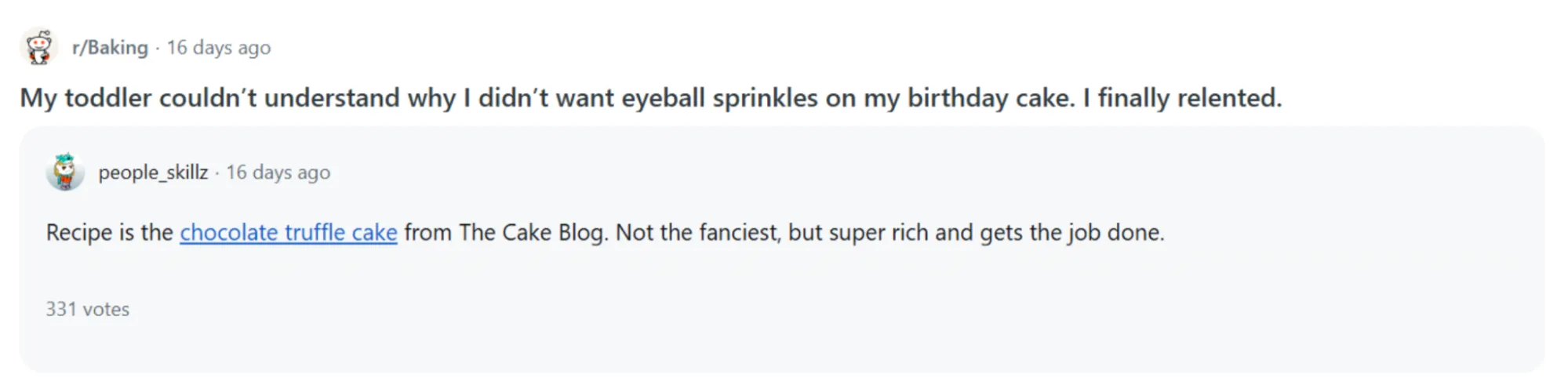
Over time, nofollow became overloaded. Website owners applied it to comment sections, user profiles, widgets, sponsored links, and even internal links they didn’t fully understand. As a result, nofollow lost clarity.
A nofollow link could mean:
In spam-heavy environments, nofollow reduced risk, but it also removed useful classification signals. From Google’s perspective, everything looked the same.
To restore clarity, Google separated link attributes by intent: editorial (default), sponsored, and UGC.

This change was about classification, not enforcement. Google wasn’t trying to punish websites for hosting communities. It wanted clearer signals about who placed a link and under what circumstances.
By distinguishing user-generated links from paid links and editorial links, Google aligned link evaluation with its broader trust and quality systems. Instead of blanket suppression, modern SEO relies on understanding intent at scale. UGC attributes support that approach by adding transparency without automatically impacting visibility.
Google’s modern link attributes are designed to classify intent, not automatically control link equity. Using the right attribute helps search engines understand why a link exists, who placed it, and how it should be interpreted within your broader link profile.
Google allows multiple link attributes on a single link, such as rel="ugc nofollow", when additional clarity is needed. This approach is most useful in high-risk or low-trust environments where links are user-generated and point to destinations you cannot reasonably assess.
Combining attributes does not change SEO value on its own. It simply gives search engines more information. In well-moderated communities with strong participation signals, using the UGC attribute alone is usually sufficient. Adding nofollow in those cases usually provides little benefit and can overclassify otherwise natural links.
User-generated links tend to appear in predictable areas of a website and across common UGC platforms. Each environment carries different levels of trust, risk, and SEO impact.
Because these links are created outside editorial control, intentional handling matters more than blanket rules.
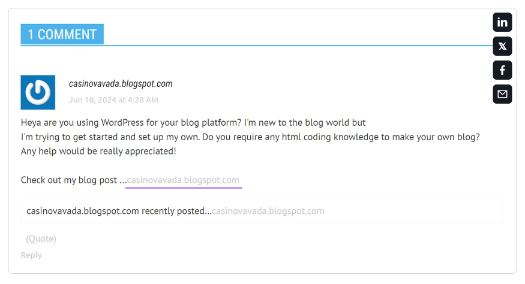
Using UGC links in 2026 is less about rigid rules and more about making clear, defensible classification decisions at scale. If users can add links to your site without editorial approval, UGC is usually the most accurate way to communicate link intent to search engines.
Use UGC links when:
In these situations, the UGC link attribute helps search engines understand link origin without suppressing legitimate contributions or discouraging participation.
UGC is not mandatory in every user-driven environment. In smaller, tightly moderated communities where contributors are known, trusted, and subject to manual review, you may choose to allow default link treatment.
This approach is common in expert forums, private SaaS communities, or invite-only discussion boards where link intent is generally aligned with editorial standards and moderation happens before publication, sometimes supported by an external UGC agency or dedicated moderation team.
UGC should not be applied to:
Sponsored links should always use the sponsored attribute. Misclassifying paid links as UGC introduces unnecessary SEO and compliance risk.
If you answer “yes” to most of these, UGC links are the correct choice.
UGC links influence search visibility through contextual trust, not automatic link equity transfer. Google no longer treats user-generated links as inherently neutral or harmful. Instead, they are evaluated within broader systems that assess relevance, intent, and site-wide quality signals.
UGC links are processed under Google’s hint-based interpretation model. The UGC attribute provides context rather than acting as a ranking directive.
Whether a user-generated link contributes to visibility depends on how well it aligns with surrounding content.
A link embedded naturally within a detailed forum response or thoughtful review carries more interpretive weight than a standalone URL dropped into a low-effort comment. This is why some user-generated links still support discovery, topical relevance, and engagement signals.
Trust in user-generated content is evaluated holistically. Google evaluates trust in user-generated content using several key signals, including:
Combined, these factors allow Google to assess whether user-generated content contributes positively to overall site quality.
UGC links rarely cause direct penalties. More commonly, problems appear through visibility dampening. Spam-heavy or poorly moderated sections can weaken site-wide trust signals, making it harder for high-quality pages to perform well.
Over time, unmanaged UGC doesn’t just affect individual outbound links. It can erode confidence in the entire website, impacting how search engines interpret content and links across the domain.
Managing UGC links effectively requires UGC management systems that scale without sacrificing trust. The goal isn’t to suppress participation, but to keep link intent clear while protecting site-wide quality.
Proactive moderation is one of the strongest trust signals available. Manual moderation works for smaller communities, but AI-assisted moderation is essential at scale. Spam filtering tools can flag repetitive anchor text, suspicious domains, and abnormal posting patterns before links go live.
Clear community guidelines also matter. When users understand what types of links are acceptable, link quality improves naturally. Consistent enforcement is critical as uneven moderation sends mixed signals to both users and search engines.
UGC alone is often sufficient in healthy communities. However, additional safeguards make sense in high-risk industries such as gambling, adult content, health, or finance, where outbound link abuse is more common.
In these environments:
Repeated domains, identical anchor text, and low-engagement threads are common indicators of link spam in user-generated areas.
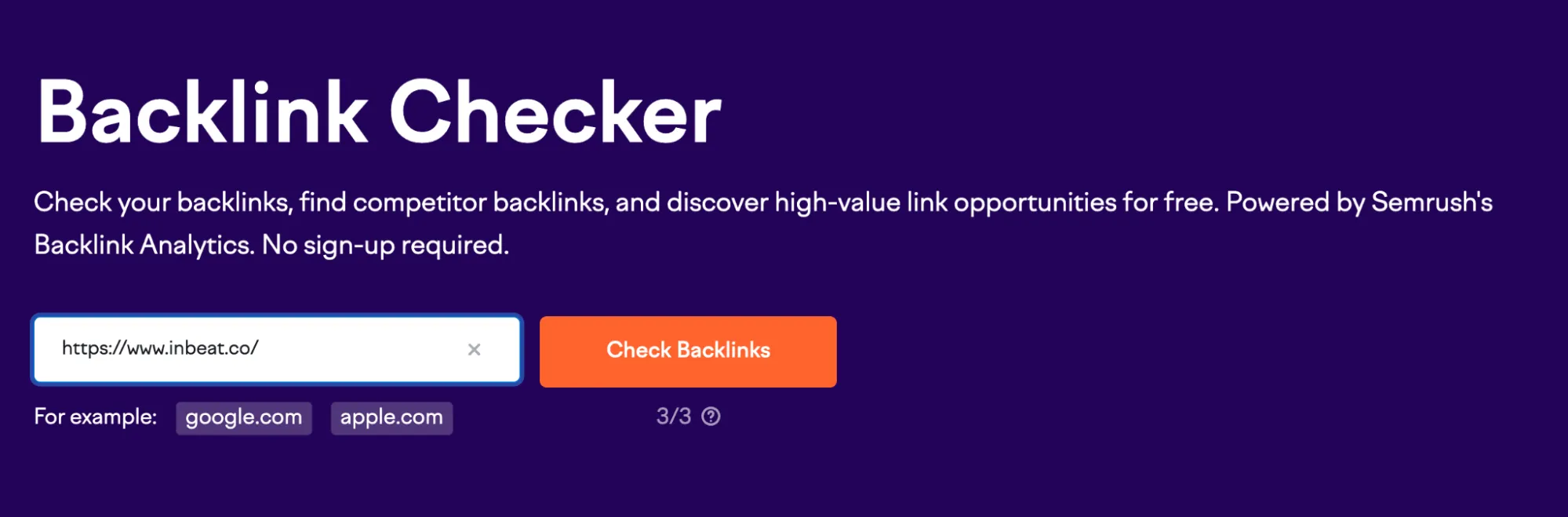
Regular audits and UGC tracking help identify issues before they affect your broader link profile. Focus on patterns rather than individual links, including:
For most sites, quarterly audits are sufficient. High-volume platforms may require monthly reviews. Scalable workflows typically combine crawling tools, spam detection systems, and manual spot checks.
Even when UGC links are understood conceptually, a few recurring mistakes still create unnecessary SEO risk.
Google’s AI-driven systems continue to move away from rigid rule-based interpretation. Instead, search engines rely more heavily on contextual trust models that evaluate signals across entire websites, including:
This shift doesn’t make UGC attributes obsolete. Transparency still matters. Clear classification helps search engines learn faster and interpret intent more accurately. UGC links remain valuable not because they directly control rankings, but because they clarify authorship and intent in complex content environments.
UGC links aren’t about suppressing value. They’re about clarity and trust. Used correctly, they help search engines understand who placed a link and why, while still supporting genuine community participation.
When implemented intentionally, UGC links support scalable growth without blurring editorial responsibility. Clear classification, consistent moderation, and regular review allow users to contribute freely while protecting site-wide quality.
UGC remains just one signal within a broader SEO system. Context, engagement, and overall site quality still drive performance. Teams that approach UGC strategically, rather than defensively, are better positioned to build durable search visibility as search continues to evolve.
At inBeat, we help teams connect the right tools with the right UGC creators to build content systems that scale. Book a call to explore what that could look like for your brand.
A UGC link is a link added by a user within user-generated content, such as blog comments, forums, reviews, or public profiles. It’s typically marked with the rel="ugc" attribute to signal that the link was not placed through editorial control by the website owner.
UGC links are treated as contextual hints, not direct ranking directives. Their impact depends on relevance, placement, surrounding content, moderation quality, and overall site trust—not the attribute alone.
In most cases, blog comments should use the UGC attribute. Nofollow may be appropriate in spam-heavy or high-risk niches, but defaulting to nofollow across all comments often overclassifies links and reduces signal clarity.
UGC links do not cause penalties on their own. Issues arise when spam-heavy user-generated content is left unmanaged, which can weaken site-wide trust signals and reduce overall search visibility over time.
UGC links should not be applied to editorial content, internal links, staff-authored pages, or paid placements. Sponsored and affiliate links should be labeled separately using the appropriate sponsored attribute.
