
User-generated content isn’t just for lifestyle brands. B2B companies are seeing big wins with it too as part of a broader marketing strategy. In fact, websites and campaigns that use UGC see a 29% higher conversion rate. And, when buyers actively engage with this content, conversions can surge, with one study showing a 102.4% lift.
As B2B buying gets faster and more trust-driven, authentic voices can land better than polished pitch decks. Strong UGC helps build credibility, removes friction from the buyer journey, cuts both evaluation time and content production costs, and improves conversion rates.
But you have to do it right.
In this guide, we’ll break down:
Let’s dive in.
UGC boosts performance: B2B websites and campaigns using user-generated content see up to 29% higher conversion rates, with engagement-driven UGC lifting conversions by over 100%.
Why it matters: Buyers trust peers more than branded content. UGC supports evaluation, shortens the sales cycle, reduces friction, and lowers content production costs.
What makes B2B UGC different: It focuses on ROI, proof of performance, and credibility across longer buying cycles and multi-person decision-making teams.
Effective B2B UGC types:
Best-performing distribution channels:
Automation tools to scale UGC:
Smart repurposing:
Community and participation:
Case studies:
Action plan:
B2B user-generated content is created by real users or professional UGC creators, though your marketing team can take part in the process.
We’ve seen time and again the key role UGC plays in helping other buyers evaluate products.
That’s because B2B UGC can take many forms: reviews, testimonials, case studies, demos, walkthroughs, forum threads, community tips, Slack screenshots showing your product in action, or social posts shared by your customers, partners, or even your own employees.
Unlike in B2C, where UGC usually drives inspiration or impulse buys, this kind of B2B content marketing supports more complex decision-making. Buyers turn to it to validate your claims, see how your product works in real scenarios across social media platforms, and understand the potential ROI.
That brings us to the next point:
B2B buyers aren’t just looking for flashy content. They need solid, credible proof. Here’s why:
That’s why high-quality content matters so much in B2B.
Buyers want to see how your product performs in the real world, and what kind of results they can expect if they choose it.
Here’s a great example from Miro’s campaign (more on them later):
B2B UGC tends to grow more slowly than in B2C. That’s partly because the sales cycles are longer, the audience is smaller, and there are often legal or compliance hurdles to clear.
That’s why some B2B companies are still reluctant to try UGC:
But when you do capture authentic content, it hits harder:
Trust drives B2B deals, and buyers believe peers far more than branded messaging. Real-world content helps prospects confirm:
Authentic UGC reduces perceived risk, strengthens authority, boosts brand awareness, and makes your product easier to champion internally.
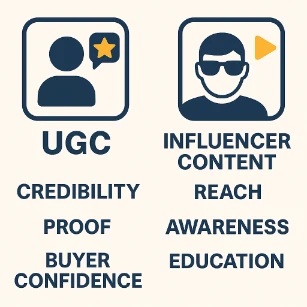
In B2B, it’s easy to lump all third-party content together, but UGC content and influencer content play very different roles.
.webp)
Both matter, but they influence buyers at different stages of the journey.
Use UGC when trust matters most.
UGC really shines in deals where there are multiple decision-makers, detailed evaluations, and budget sign-offs.
Buyers don’t want polished claims but to hear real stories from people like them. Honest, relatable content that shows your product works in the real world.
Use influencer content for reach and awareness.
It’s a powerful tool for top-of-funnel impact and great for getting your brand in front of new eyes, sparking interest, and showing your expertise through thought leadership videos. This is especially true when you’re breaking into a new market or category.
Best practice: Use both strategically:
UGC is a powerful growth tool for B2B brands because it drives trust, boosts engagement, and can even improve your SEO, directly fueling your pipeline and bottom line.
When prospects see real teams using your tools or services in video content on your website or social posts, it helps them picture real-world outcomes. This kind of content is clear and relatable, giving decision‑makers a window into what real-world success looks like.
Real stories feel more relevant and trustworthy than polished social media posts and ads. UGC consistently drives stronger engagement signals. Campaigns with UGC can have a 50% lift in engagement compared with campaigns without UGC, as well as:
These actions show real buyer intent. And in many cases, user-generated content outperforms brand-created material, especially when prospects are actively comparing solutions.
UGC isn’t just great for trust; it’s great for search visibility, too. Here's how it helps your site rank higher and show up where it matters:
Here’s a good example:

These kinds of UGC tend to perform well across the B2B buying journey, as long as you use them strategically and with purpose.
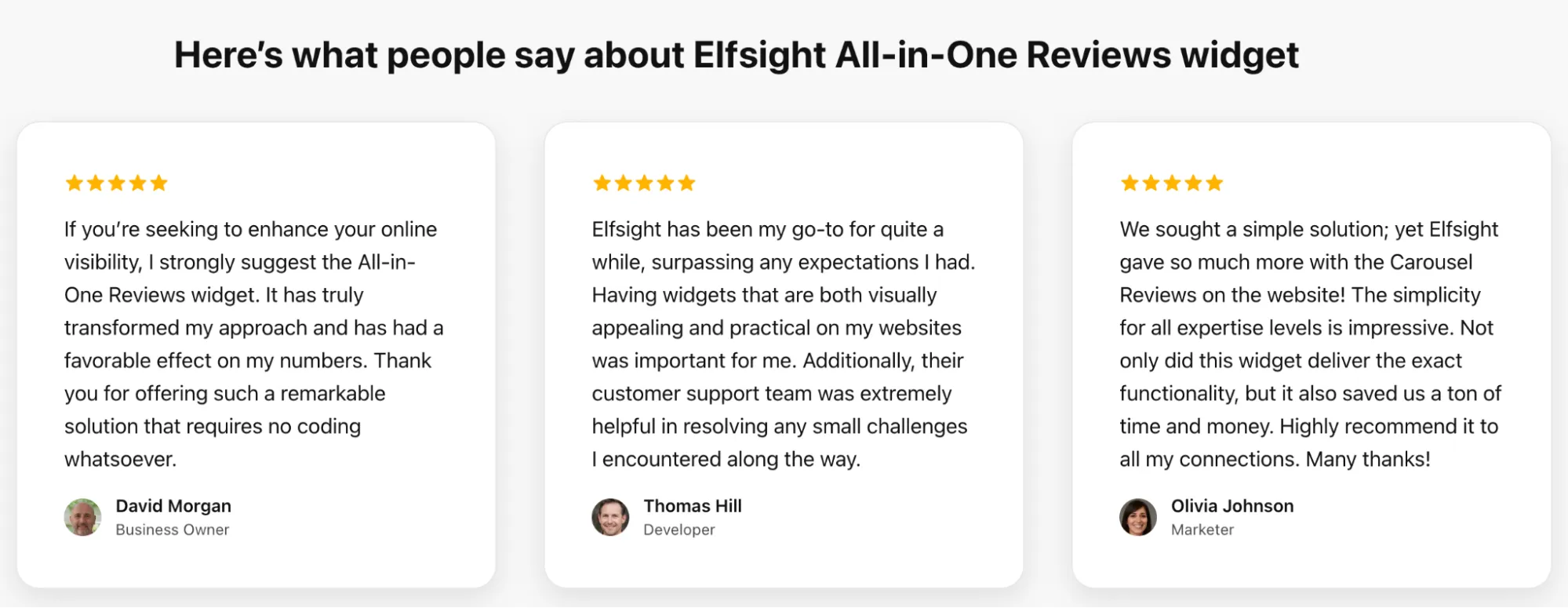
Customer reviews and testimonials are among the most powerful forms of B2B UGC. These might be: written reviews, ratings on platforms like G2 or Capterra, video testimonials, or more detailed case studies that support lead generation.
Here’s a good example from software delivery metrics dashboard Axify:
.webp)
Decision‑makers rely on this kind of content to see real performance, compare vendors, and validate potential ROI.
To keep reviews coming in, many teams use methods like:
This helps build a steady stream of authentic UGC without adding heavy manual workload.
EGC taps into your team’s knowledge and can turn employees into powerful brand advocates on LinkedIn, giving prospects a behind-the-scenes view of how your product actually works. It helps simplify complex tools, build credibility, and show real people behind your brand.
Some great EGC formats include:
Here’s a good example of UGC you might draw inspiration from:
Insider tip: To keep things on brand and secure, light guardrails like NDA reminders, brand tone tips, and a simple review process can help make EGC easy and safe to scale.
Visual UGC helps buyers see the product in action and understand workflows more clearly. Examples include:
These visuals can outperform produced brand demos because they show real setups, not idealized ones. They can also be repurposed into video testimonials across channels. Just remember to always obtain permission, blur sensitive information, and credit the creator when repurposing.
B2B podcast production company Content Allies offers a good example with testimonials like the one below. Even better, these videos are posted on their case study pages, too:
A strong user community is one of the most powerful engines for high-impact B2B UGC.
When your customers connect, share, and help each other, you naturally generate valuable content without always having to ask for it.
From real-life workflows and templates to honest feedback and daily discussions, these interactions become a goldmine for your marketing, sales, and product teams. Best of all, it’s authentic, scalable, and driven by the people who use your product every day.
Platforms like Slack groups, LinkedIn communities, and product forums surface tips, workflows, and ideas that can feed new UGC campaigns, including:
.webp)
If you want to avoid low-quality user-generated content, you need to guide the conversation. The best UGC doesn’t come from chance. It comes from thoughtful prompts that make it easy (and fun) for your community to share.
Try these proven ways to get things flowing:
These small nudges go a long way in turning your community into a steady source of authentic, usable content.
Structured community formats make participation easier and more consistent:
These frameworks lower the barrier to sharing and maintain steady content generation.
For B2B users, the best rewards usually aren’t discounts or coupons. They’re about recognition, access, and real visibility. Some incentives that tend to work really well:
These kinds of incentives strengthen brand loyalty as they make users feel valued and part of something bigger. This encourages them to share tutorials, ideas, and success stories. That’s the kind of authentic content that becomes powerful assets for both marketing and social proof.
To make the most of your user-generated content, you need to show it where buyers are already researching, comparing, and evaluating, not just where you want them to see it. Here are the channels that tend to work best for B2B brands looking to reach decision‑makers effectively.
LinkedIn is the most effective distribution channel as part of a strong B2B SaaS marketing strategy. Prioritize:
Employee advocacy typically outperforms brand pages, making personal profiles essential for reach and trust.
Best for: Awareness, consideration, and social proof.
SEMrush offers a good example, posting real marketers and SEOs from one of their conferences:
YouTube excels at delivering educational, visual content, especially shorter formats like YouTube Shorts. Publish:
Because YouTube content is evergreen and searchable, it continues supporting prospects long after publication.
Best for: Consideration and decision.
.webp)
Your site should serve as the central hub for high-value UGC, with this content embedded directly on each product page. Create or expand:
This helps buyers validate claims quickly and aligns with SEO strategy.
Best for: Consideration and decision.
UGC strengthens sales conversations by providing peer-led proof and aligns naturally with account-based marketing approaches. Add:
In tools like Highspot or Showpad, sales teams can quickly surface the right asset for each objection or vertical.
Best for: Decision.
.webp)
Adding UGC to email increases engagement and lifts credibility across one of your strongest marketing channels. Use:
These elements reinforce authenticity without requiring additional copy.
Best for: Awareness → Retention.
UGC performs exceptionally well in paid campaigns, and even outperforms brand ads with 90% increase in user session engagement. UGC works particularly well for retargeting and BOFU audiences. Effective formats include:
UGC ads feel more genuine and often deliver higher CTRs and lower CPLs than polished brand creative.
Best for: Consideration and decision.
Manually chasing UGC doesn’t scale in B2B. Long buying cycles, multiple stakeholders, and recurring product milestones make automation essential for capturing content consistently and safely.
Automation ensures you collect all UGC at the right moments and maintain proper content rights management without operational overhead. Depending on the UGC tool you pick, you can use it for:
The result is a steady pipeline of user-generated content without constant manual follow-up.
Prioritize platforms that support both scale and compliance:
Integrating UGC capture directly into the customer lifecycle ensures you get consistent, high-quality contributions without manual outreach.
UGC becomes far more valuable when it’s repurposed across marketing, sales, onboarding, and retention. Instead of treating reviews or testimonials as one-off assets, extend their impact with intentional reuse.
Incorporate UGC directly into product and feature pages:
This adds instant credibility, helps buyers validate claims faster, and increases conversion rates at key stages.
Break down customer-recorded demos, walkthroughs, or testimonials into shorter clips for:
Short, unpolished videos frequently outperform studio-grade creative and deliver powerful social proof.
Real user tutorials make onboarding faster and become valuable training content.
Embed UGC in:
Users trust other users’ shortcuts, tips, and workflows.
Convert standout lines from interviews, reviews, or community posts into assets that boost content engagement, like:
This multiplies your content output without additional creative production.
A single strong testimonial or walkthrough can appear in:
The goal isn’t more content. It’s smarter reuse of high-value UGC across every buyer and customer touchpoint.
The examples below illustrate how structured UGC programs create ongoing momentum and reusable content libraries.
Miro partnered with LinkedIn and Instagram creators in product, UX, AI, and social media to design and publish their own custom Miro templates. Each creator shared the template across their channels (LinkedIn, Instagram, newsletters, and communities) and uploaded it directly into Miro’s template library.
Basically, all these niche creators turned into hands-on contributors inside the product.
.webp)
Outcomes
Lessons for B2B
Just like Miro, you can activate creators inside your product. Book a call with inBeat to unlock this style of scalable UGC.
SurveyMonkey partnered with Viral Nation to activate a group of B2B creators. These creators asked their audiences questions using SurveyMonkey forms, covering topics like workplace culture, management, and startup challenges.
After collecting responses, each creator shared the results with their own commentary, turning raw data into engaging insights.
Outcomes
Lessons for B2B

These campaigns show that UGC scales across industries, from consumer hardware to SaaS, when companies give people a clear role to play. Whether it’s creators building templates inside Miro or customers sharing workflows in HubSpot, the common thread is structured participation.
For B2B teams, the key takeaways are:
The goal is a system where UGC flows continuously and supports marketing, sales, customer success, and product with minimal friction.
If you’re ready to put this UGC framework into action, start by exploring Showcase, then get in touch with inBeat Agency to build a full-fledged, creator-powered content engine that delivers at scale.
UGC provides peer validation at every stage of the buyer journey. Prospects rely on real customer experiences through reviews, examples, workflows, and outcomes, to confirm fit, reduce risk, and support internal approvals.
By automating permission capture, using lifecycle-triggered requests, and implementing consent workflows. Advocacy programs and community prompts help maintain consistent, voluntary contributions.
Key metrics include conversion lift, demo or trial requests, engagement depth, review volume, reuse rate across channels, and pipeline influenced by UGC interactions.
Yes. Enterprise buying committees value measurable results, implementation success, and peer endorsements from recognizable companies. High-quality UGC can emphasize all that.
Tools like Influitive, Highspot, Reviewflowz, and Showpad support sourcing, rights management, governance, and distribution across marketing and sales teams.
