Alina Toia
November 28, 2025

Beginner's Guide to UGC Management: 7 Strategies You Need in 2026

User-generated content is how brands genuinely connect with their audience, and that’s why 87% of them are using this strategy. 

But it only works when UGC management is done right.

We’ve watched many companies stumble when UGC isn’t handled thoughtfully, and we’ve learned what works. 

In this guide, we’ll walk you through the seven best strategies for collecting, moderating, and using UGC, so you can increase engagement, build trust, and let your customers’ voices truly shape your brand’s story.

Let’s dive in.

P.S.: If you want to get started with UGC, you need the right agency to help you out. We explained precisely how to choose the right UGC service for your needs, complete with red flags and pro tips.

What Is UGC Management?

UGC management is the process of collecting, approving, organizing, and using user-generated content while controlling permissions and usage rules. It covers everything from creator consent to where and how the content appears across social posts, ads, and websites.

User-generated content is something that many brands are using today, and for a good reason. In fact, 79% of consumers say UGC strongly influences their buying decisions. So, if you go about it correctly, your customers will say that about your UGC ads as well.

Take, for example, a TikTok by @beautybyella, where you can see her exact experience using this brow lamination technique:

It’s no wonder UGC posts elicit so much trust. 

Why Should You Focus on User-Generated Content Management?

User-generated content grows fast; in fact, it can generate 6.9 times more engagement than branded content. So, without proper management, it can create legal, brand, and workflow issues. A clear UGC management process helps you control permissions, track approvals, and know exactly where each asset can be used.

This protects your brand from misuse and keeps teams aligned across social, paid ads, and web. It also saves time by removing guesswork and repeated checks.

When UGC is managed well, your brand can scale content with confidence, keep creator relationships strong, and turn real customer posts into reliable marketing assets.

That brings us to the next point.

Benefits of UGC Management

When you manage UGC thoughtfully, you can amplify your brand authentically and ethically. Here are the main benefits of well-managed UGC:

Getting Higher-Quality UGC

One of the first things you’ll notice is the improvement in the quality of content your audience or UGC creators produce. By giving clear guidance, monitoring submissions, and highlighting standout posts, you create a standard that encourages better visuals, storytelling, and authenticity. 

Take the case of a beauty brand that inBeat Agency worked on. The brand ran a UGC campaign asking creators to share their experience with the product. 

Four lifestyle images featuring diverse creators holding and displaying Native skincare products in bathroom and outdoor settings, highlighting natural lighting and everyday routines.

By providing clear instructions and tagging guidelines, the campaign generated over 1000 high-quality, creative posts across 5 collections. 

And yes, they increased both engagement and brand reach. 

Better Engagement 

UGC drives engagement because it’s real, relatable, and human. When your audience sees people like them using and enjoying your products, they’re far more likely to interact. 

Data proves this: content featuring UGC drives up to a 28% increase in engagement compared to brand-only campaigns.

The Chipotle Lid Flip challenge, for example,  drove massive engagement and reach. There are currently over 34,000 posts with this hashtag on TikTok alone, and over 320 million views so far.

Instagram hashtag page for #chipotlelidflip displaying a grid of user-generated videos featuring people attempting the Chipotle bowl lid flip challenge, including creator posts and branded content.
Source

More importantly, Chipotle also built a community of loyal followers sharing tips and experiences daily. 

And from our own in-house experience, featuring UGC consistently on social media can result in up to 3x more comments and shares.

Better Conversions

Relatable UGC turns that engagement we’ve been telling you about into conversions. Consumers trust content from real people far more than traditional advertising. According to one source, 92% of consumers trust UGC more than traditional ads.

We’ve also seen campaigns using authentic UGC lift conversion rates by 20-30% compared to standard ads. That’s why so many brands are using unboxing videos or customer review clips for Facebook Ads.

Even though there are plenty of bad UGC examples, here are some great ones:

These posts consistently outperformed standard product shots, driving measurable sales and lowering ad costs. By integrating authentic content like this, you turn engagement into real ad revenue.

Easier to Optimize Campaigns

When you manage UGC systematically, it’s much easier to see what works and improve your campaigns. Tagging content, tracking engagement, and analyzing top-performing posts lets you replicate success and cut out what doesn’t work. 

Tools like Brandwatch, Mention, and EmbedSocial help you analyze UGC across channels, so we highly recommend them.

Better Brand Reputation 

Sharing authentic content shows transparency and builds trust. UGC humanizes your brand, proving that real people use and endorse your products.

One source states that consumers are 2.4 times more likely to view UGC as authentic than brand-created content.

And that’s the cornerstone of branding. 

This approach strengthens your reputation, mitigates negative perceptions, and increases repeat purchases. For brands like yours, authentic storytelling is a key differentiator in crowded markets.

Valuable Customer Insights 

UGC is also a window into your audience. By analyzing posts, reviews, and comments, you can uncover trends, preferences, and pain points that guide product development, marketing, and customer service. 

Social listening helps you spot emerging issues before they escalate. For example, you can notice recurring feedback about packaging through UGC comments on Instagram. 

Sometimes, UGC creators can even give you more information about product uses you didn’t even think of.

Using these insights, you can improve your design and messaging and earn higher customer satisfaction. 

In short, analyzing UGC turns everyday feedback into actionable business intelligence. And that’s an edge over competitors.

Strategies for Effective UGC Management

Managing user-generated content effectively means building a repeatable system that helps you collect, organize, and amplify authentic content at scale. 

Below, we’ll walk you through seven actionable strategies you can apply today to boost credibility, engagement, and ROI.

UGC Strategy Framework – What & Why
Strategy What it involves Why it matters
Collect UGC Finding content through social listening, hashtags, reviews, and support channels Starts your pipeline with real, relevant customer content
Incentivize UGC Contests, rewards, recognition, and loyalty programs Motivates customers to create and share more content
Obtain usage rights Requesting permission and documenting approvals Protects your brand from legal and ownership issues
Moderate UGC Applying quality, safety, and brand checks Keeps published content aligned with brand standards
Distribute across channels Using UGC on social, website, email, and ads Extends content value beyond a single platform
Analyze performance Tracking engagement, sentiment, and conversions Shows what works so you can repeat it
Work With Creators Partnering with skilled UGC creators Improves content quality while keeping it authentic

1. Collect UGC

Before you can leverage UGC, you need a reliable way to find it. The collection stage sets the foundation for everything else. If you start with authentic, relevant content, performance follows naturally:
  • Use social listening tools: Use content discovery tools like Brandwatch, Mention, or Sprout Social to track brand mentions, hashtags, and keywords across channels. These tools uncover organic posts, customer videos, and testimonials in real time.
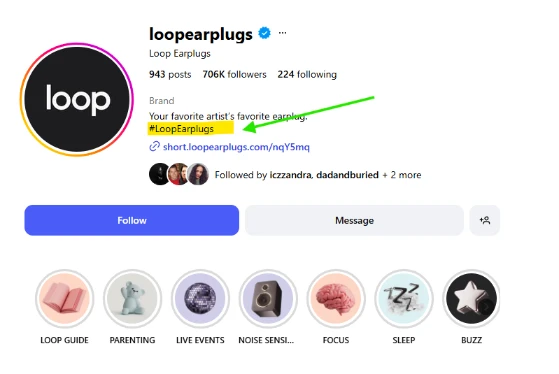
  • Use hashtags: Create a branded hashtag that’s easily recognizable and encourage your brand’s customers to use it. Then, it’ll be easier to see all those posts they make across social media platforms, like so:
Instagram profile of Loop Earplugs showing brand bio, follower count, website link, and story highlights related to live events, focus, sleep, and noise sensitivity.
Image source
  • Monitor customer reviews and ratings: Your review pages on Google My Business, Trustpilot, or Amazon are hidden goldmines. Use EmbedSocial to centralize feedback and generate visuals automatically. Track review volume and sentiment weekly and pay attention to low ratings because they reveal friction points faster than surveys.

Case in point: A beauty/eyewear brand ran UGC‑based A/B tests with 50k+ visitors and saw an 18% increase in conversion rate and a 58% drop in cost per acquisition. These are important metrics to consider in your own campaigns.

  • Collect UGC from customer support interactions: Support chats, DMs, and emails often contain raw testimonials. Train your team to tag messages as “UGC opportunities” and store them in Notion, Airtable, or Google Drive.
  • Use AI to tag and organize UGC automatically: Tools like TINT, Dash Hudson, and Crowdriff now include AI filters that automatically tag, categorize, and prioritize UGC based on how likely it is to drive engagement. For instance, EmbedSocial’s platform automatically identifies, ranks, and moderates user‑generated content so you can quickly find what you need.

Of course, you can also hire UGC creators to work for your campaigns. In that case, UGC collection is more seamless.

Still, you’ll need to keep track of everything in a tool like ClickUp or Airtable, with lists like these below. And a creator CRM will only streamline communication.
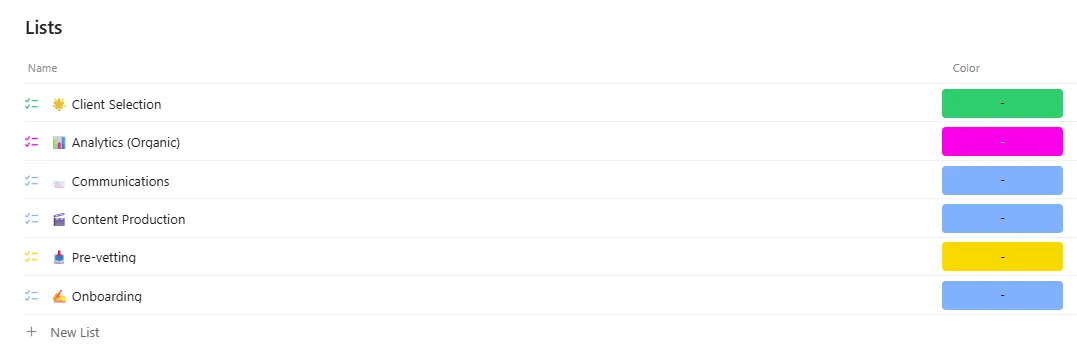
Task management interface displaying categorized lists such as Client Selection, Analytics (Organic), Communications, Content Production, Pre-vetting, and Onboarding, each labeled with a color tag.

2. Incentivize UGC

If you want great content, give people a reason to create it. Incentives transform casual customers into passionate advocates:

  • Run contests and UGC campaigns: Define a campaign theme that reflects your brand’s lifestyle, e.g., #MyMorningWorkout or #ViewFromMyTrip. Tools like ShortStack, Woobox, or Gleam simplify entries and analytics. For example, Coca‑Cola’s iconic Share a Coke campaign made customers the heroes by encouraging them to post with #ShareACoke. As a side note, here’s how the original idea started:


  • Offer tangible rewards, recognition & access: Rewards don’t always mean cash. Try gift cards, discount codes, or early-access perks. Highlight your top creators weekly or monthly. This kind of recognition can outperform prizes. GoPro, for example, always tags its creators, like so:
Instagram post by GoPro showing a motorcyclist riding along a dirt road through colorful autumn forests in Michigan, with a caption noting the footage was shot on a HERO13 Black camera.Instagram post by GoPro showing a motorcyclist riding along a dirt road through colorful autumn forests in Michigan, with a caption noting the footage was shot on a HERO13 Black camera.
Source
  • Build loyalty programs around UGC: Reward customers who share experiences. Platforms like Smile.io or LoyaltyLion let fans earn points for posts, reviews, or videos, creating a self-sustaining loop of advocacy and retention.

3. Obtain UGC Usage Rights

Before sharing someone’s content, always get permission. Obtaining content rights is both ethical and legally essential, according to the FTC guidelines for UGC we’ve analyzed.

Here are the basic steps:

  • Understand legal requirements: Even if the content is public, you typically need explicit consent. Review your country’s copyright laws and each platform’s TOS.
  • Obtain creator approval: Send a short message: “We’d love to feature your post! Reply #YesBrand to grant permission.” Automate this with Pixlee, TINT, or Rightsify to log approvals safely. Of course, be clear whether you’ll want to get usage rights OR perpetual rights.

  • Use contract templates: For long-term or paid partnerships, outline where the content appears, for how long, and with what credit. We created a UGC contract template you can download for free.

4. Moderate UGC

A good content strategy is essential, but moderation protects your reputation while allowing creativity to shine:

  • Establish clear guidelines: Publish a concise UGC policy covering tone, copyright, inclusivity, and privacy. Link it in your website footer or campaign hub.
  • Use automated tools, but ensure people double-check everything: Solutions like AI.Mod, ModerateContent, or Trustpilot AI filters flag profanity or sensitive visuals. Of course, AI can flag, but humans interpret. Assign trained moderators in-house or via partners for manual tracking and extra content security.

For example, Bazaarvoice can moderate 73% of UGC in just a few seconds, using NLP. The other 27% is left to human moderators.

5. Digital Asset Management: Distribute UGC Across Channels

Once you’ve curated great UGC, amplify it everywhere your audience interacts with your brand:

  • Share on social media: Curate top posts weekly, tag creators, and schedule through Later, Buffer, or Hootsuite. Of course, make sure you get permission from them first.  Cold-press juicer brand Hurom does this fairly well with Instagram collab posts. It’s a native feature that allows two accounts (typically a creator and a brand) to co-author the same post.
    • The post appears on both profiles simultaneously.
    • Likes, comments, and engagement are shared between them.
    • The credit line at the top shows “Creator and Brand” instead of a tagged mention.
  • Feature on website or blog: Add a “Community Gallery” using Taggbox or EmbedSocial. In fact, product pages featuring UGC can increase conversion rates by up to 161%. Iconic London, for instance, integrated user‑generated photos and reviews into their website and social content, and they saw a 126% lift in conversion rate within 12 months. 

Sephora offers a great example of featuring real people on its website, too:
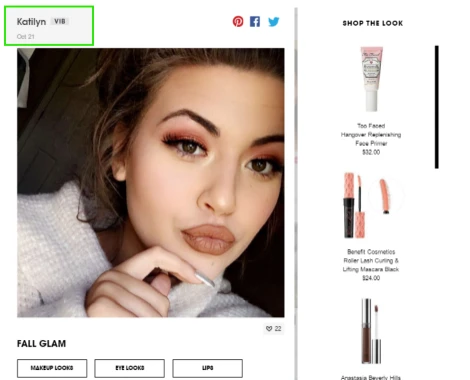
Beauty blog page featuring a close-up makeup look titled “Fall Glam,” with the author name and date displayed, alongside a “Shop the Look” sidebar listing featured cosmetic products and prices.
Image source

  • Include in email campaigns: Engage with your different audience segments by delivering relatable content with a narrative that resonates. It will increase open rates, engagement, and click-through rates. And if you’re doing a retargeting campaign on email, chances are you’re going to see more sales, too.

6. Analyze and Measure Your Campaign

Once your UGC campaign is live, the real work begins: understanding what’s working and what isn’t. 

At this stage, data is your feedback loop for optimizing the next wave of content.

Of course, you want to be tracking metrics that truly matter to your goals. 

  • If your objective is brand awareness, track reach, impressions, and the number of new participants generating content. 
  • Engagement metrics include saves, shares, and comments. These show emotional connection more than simple likes. 
  • And if conversion is your north star, connect your UGC performance to Google Analytics data or your eCommerce dashboard to see how user content drives actions like sign-ups or purchases.

Pro tip: From our own experience, sentiment analysis typically reveals insights that numbers alone can’t. AI-driven analytics tools like EmbedSocial, Brandwatch, or Mention can assess how people feel about your brand across posts, comments, and hashtags.

Also, make sure that you track performance, so you can interpret patterns.

Ask: 

  • Which types of UGC (videos, before-and-after photos, unboxing clips) drive the longest comment threads? 
  • Which hashtags bring in authentic creators versus generic reposts? 

Data helps you amplify what resonates and quietly retire what doesn’t. The goal is not just more UGC, but better-performing UGC every time.

7. Work with Content Creators

Creators aren’t influencers, and that’s exactly why they work.

  • Influencers build personal brands; creators build content ecosystems. An influencer’s power lies in trust and persona: their audience listens to them
  • A creator’s power lies in craft: their audience appreciates what they make. When you partner with creators, you’re not just borrowing reach, you’re borrowing creative capability.

Why does this tactic work? 

Because authentic user-generated content thrives on production that still feels organic, skilled creators bridge that gap perfectly. They can shoot, edit, and narrate in a style that fits your brand voice while staying true to their own. 

To implement this:

  • Build a small network of recurring creators rather than one-off collaborations. 
  • Give them creative freedom within brand boundaries. Share your key talking points, but let them choose how to tell the story. 

Plus, it’s much easier to get high-quality UGC content from the start because UGC creators know what they’re doing. Check out this video to see the kind of work a UGC creator does behind the scenes to get perfect visuals:


To help you out in this process, we've created a checklist that you can use when managing your first UGC project. Download it here:

UGC Management Checklist

UGC Management Tools by Use Case

UGC management involves multiple moving parts, from finding content to tracking performance. Instead of relying on one platform to do everything, most teams use different tools for specific jobs.

The table below breaks down the most common UGC management use cases, example tools that support each task, and why those tools matter.

UGC Tools by Use Case – What & Why
Use Case Example tools Why these tools matter
Content discovery & social listening Brandwatch, Mention Helps brands find organic UGC across social platforms, forums, and review sites before it gets lost in the feed
UGC collection & aggregation EmbedSocial, TINT Pulls UGC from hashtags, reviews, and submissions into one central library
Rights management & permissions Pixlee, Flowbox Manages creator consent, usage terms, and approval records to reduce legal risk
Moderation & quality control Bazaarvoice, Yotpo Filters out low-quality, off-brand, or non-compliant content before publishing
Content organization & asset management Bynder, Cloudinary Keeps UGC searchable, tagged, and easy to reuse across teams and channels
Website & ecommerce display Nosto, Shopify Turns UGC into social proof on product pages, galleries, and landing pages
Paid ads & creative testing Meta Ads Manager, TikTok Ads Manager Tests UGC in paid campaigns to find which creators, hooks, and formats drive results
Performance tracking & analytics Google Analytics, Sprout Social Measures engagement, conversions, and downstream impact of UGC
AI-powered insights & automation Hootsuite, Emplifi Uses AI to surface trends, flag risks, and identify high-performing UGC faster

Best Practices of UGC Management

Managing UGC well is less about tools and more about process.

In fact, brands that establish clear UGC guidelines and workflows see up to a 20% reduction in moderation time. This means that teams that follow clear rules from the start reduce risk, move faster, and build better creator relationships. 

Here are the core best practices that help brands stay organized, compliant, and scalable:

  • Set clear usage rules before you collect content: Decide how content will be used before reaching out to creators. This includes placement, duration, and whether the content will run as ads or organic posts. Clear internal alignment prevents confusion later.
  • Always get written permission: Verbal approval is not enough. Written consent creates a clear record and protects the brand if questions or claims come up later.
  • Track rights and expiration dates: UGC does not last forever unless agreed on. Track start dates, end dates, and renewals so content does not stay live past its allowed use.
  • Centralize content and approvals: Store assets, permissions, and notes in one shared system. This keeps legal, social, and paid teams working from the same source of truth.
  • Limit editing to what was approved: Only make changes that were clearly allowed. Staying within approved edits protects trust and avoids disputes with creators.
  • Review and audit regularly: Check live content on a regular basis. This helps catch expired rights, missing approvals, or incorrect placements before they become issues.

UGC Management Mistakes

Even the best UGC strategy can fall short if you overlook a few common mistakes. Based on what we’ve seen, here are the biggest pitfalls and how to stay clear of them:

  • Heavily editing content: When you over-polish user-generated content, it loses the very thing that makes it powerful: authenticity.  People don’t want to see another glossy ad. They want high-quality, yes, but they also want to see real stories from real users. That's the definition of social proof.
  • Inconsistent monitoring: If you’re not keeping an eye on what’s being posted, you’ll miss great content or worse, let negative narratives spread. We’ve seen brands lose incredible opportunities simply because no one was checking mentions or campaign hashtags. Setting up weekly monitoring and alerts solves this. 
  • Ignoring negative mentions: Every negative comment is a chance to learn something valuable. Ignoring criticism can damage your reputation. That’s why we encourage you to use social listening tools to catch these mentions early and act fast. If you jump in to resolve issues fast, you can actually turn critics into fans. 

Side note: According to BrightLocal, your customers are over 36% more likely to use your business if you respond to negative comments.

Bar chart from BrightLocal’s Local Consumer Review Survey 2025 showing how likely consumers are to use a business based on how it responds to reviews, comparing data from 2022 to 2025 across different response behaviors.
Image source
  • Disorganized storage: Without a proper system, amazing UGC can get lost in a sea of screenshots and folders. We always recommend building a centralized content library organized by campaign, platform, or content type. When UGC is properly tagged and stored, you can repurpose it more efficiently, which means faster turnarounds, less stress, and better ROI on your campaigns.
  • Lack of clear guidelines: If your audience or creators don’t know what kind of content you’re looking for, you’ll end up sorting through a mess of off-brand submissions. Clear direction, such as tone and hashtags keep everything aligned. In fact, many UGC professionals highlight clear submission guidelines as a best practice to ensure consistent UGC.
  • Skipping legal approvals: This one’s easy to overlook but can cause major headaches later. Always get permission before using UGC. Whether it’s through a DM confirmation or a signed release, UGC rights management keeps your brand compliant and trustworthy. It’s also smart business: according to Gitnux, 70% of consumers are more likely to trust brands that demonstrate transparency. Respect the creator, and consumers will respect your brand.
  • Neglecting performance analysis: UGC can deliver amazing results, but only if you track and learn from it. In fact, brands tracking UGC performance metrics consistently see stronger ROI and retention rates, as data helps them focus on content that truly drives conversions. AI-powered tools are great, but you have to correctly interpret the metrics.

By steering clear of these mistakes, you’ll build a UGC strategy that’s authentic, organized, and data-driven. One that not only looks good but also works hard to grow your brand and earn genuine trust from your customers.

Pro tip: We've also created a dos and don'ts of UGC management mini guide to help you on the spot. You can download it here:

Do's and Don'ts of UGC Management

How to Use AI for UGC Management

AI helps brands manage UGC at scale without losing control over quality, permissions, or relevance. Instead of sorting content by hand, teams can rely on AI to analyze, organize, and surface the right assets at the right time.

Here are practical ways AI supports modern UGC management.

Read Audience Signals Through Sentiment and Patterns

AI can scan large volumes of UGC to understand how people feel about your brand, products, or campaigns. This includes spotting positive reactions, recurring complaints, or shifts in tone across posts and comments.

And this matters because UGC is posted where people already talk. In fact, around 5.66 billion people use social media today. This means AI helps brands make sense of conversations happening at a massive scale instead of guessing audience sentiment.

Infographic titled “Essential Digital Headlines” showing global statistics for October 2025, including total population (8.25 billion), unique mobile phone subscribers (5.78 billion), individuals using the internet (6.04 billion), and social media user identities (5.66 billion), with percentage comparisons to total population.
Source: Meltwater

Keep UGC Libraries Organized With Automated Tagging

Manually sorting photos, videos, and reviews does not scale. AI can tag content by theme, product type, mood, or format, which makes it easier to find assets later. This allows teams to pull campaign-ready UGC quickly without digging through folders or spreadsheets.

Show the Right UGC With Smart Content Matching

AI can help decide which UGC to show in different places based on user behavior and engagement signals. For example, shoppers who interact with product reviews may see more customer photos or videos tied to those items.

And this approach reflects how platforms work today. Over 80% of social media content recommendations are now powered by AI, which shows why matching content to intent drives stronger engagement.

Turn UGC Into Actionable Business Insights

Beyond content use, AI can analyze UGC to point to common feedback, feature requests, or product issues. These insights help teams adjust messaging, improve products, or plan future campaigns based on real customer input. Instead of treating UGC as decoration, AI helps brands use it as a decision-support tool.

Power Your UGC Management with inBeat Agency

Managing UGC effectively means creating a living system that amplifies your customers’ voices and fuels real business growth. And the brands that stand out are those that see UGC as part of their growth strategy. 

When you consistently organize, analyze, and activate authentic customer stories, you boost customer engagement and build trust that drives conversions. 

With the right partner, like inBeat Agency, brands can scale this system safely, keep permissions clean, and turn UGC into a repeatable growth channel.

Pro tip: Want to craft a UGC ecosystem that feels human, scales efficiently, and delivers measurable ROI? inBeat Agency can get you started.

FAQ

What is UGC and how does it work?

UGC is content created by real customers and not the brand. It works when brands collect that content, get permission, and use it across ads, social posts, and websites.

What is a UGC manager?

A UGC manager oversees the strategy, content collection, and optimization of user-generated content. They coordinate your creators, approve submissions, track performance metrics, and ensure every piece of content aligns with your brand identity and campaign goals.

How to start UGC as a beginner?

Start by creating authentic videos or photos featuring products you genuinely use. Post them with clear hashtags, tag brands, and study what performs well. Consistency and relatable storytelling attract both audiences and brand collaborations.

What are UGC examples?

UGC examples include customer reviews, product unboxings, tutorials, before-and-after transformations, and lifestyle videos created by real users or creators. These authentic posts help you showcase brand credibility, build trust, and inspire potential buyers.

How do I monitor UGC?

Track mentions, tags, hashtags, and comments across your social platforms. UGC tools or social listening software help collect and review everything in one place.

Why is UGC important for my brand or business?

UGC builds trust faster than brand-made content. People believe real customers more than ads, which leads to higher engagement and stronger buying signals.

How do you ensure the quality and relevance of UGC?

Set clear approval rules and review content before use. Only publish UGC that fits your brand tone, product focus, and campaign goal.

How can UGC be used in my marketing strategy?

UGC can run in paid ads, social posts, emails, landing pages, and product pages. It supports performance marketing while also strengthening brand credibility.

APPENDIX: RESEARCH SOURCES

  1. marketscreener.com
  2. growthspurt.com
  3. medium.com
  4. adweek.org
  5. bazaarvoice.com
  6. brightlocal.com
  7. gitnux.org
  8. linearity.io

Get started

Partner with leading content creators to produce premium user-generated advertising content.